Experiencia práctica
Sobre cómo se hace software, en la práctica
Experiencia con IA, automatización y software a medida: qué funciona y dónde se equivocan las empresas.
Agentes de IA
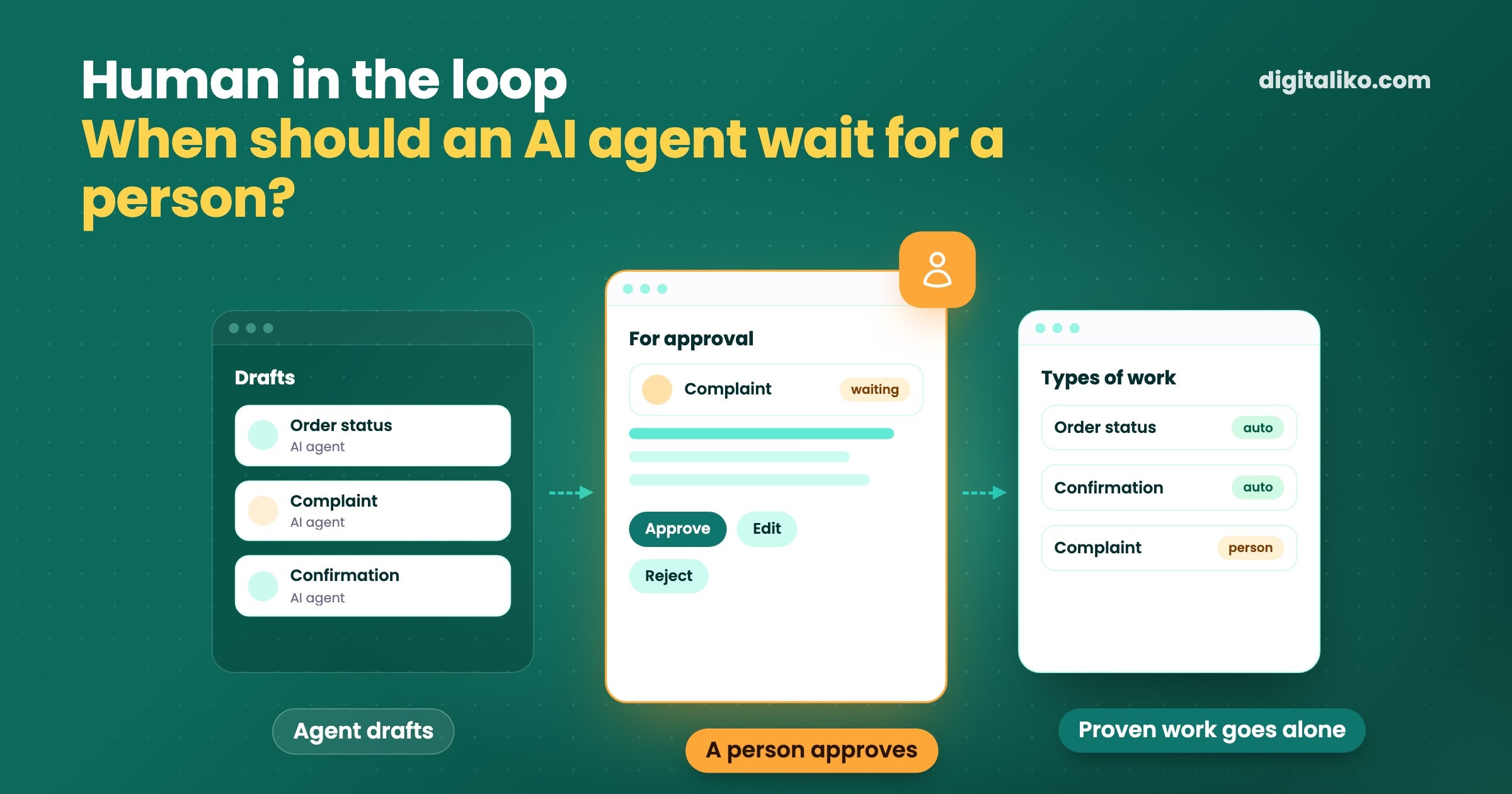
Human in the loop: when should an AI agent wait?
Human in the loop means an AI agent does the work and a person approves it at agreed points. Which steps to approve, how to avoid approval fatigue and when to let the agent work alone.
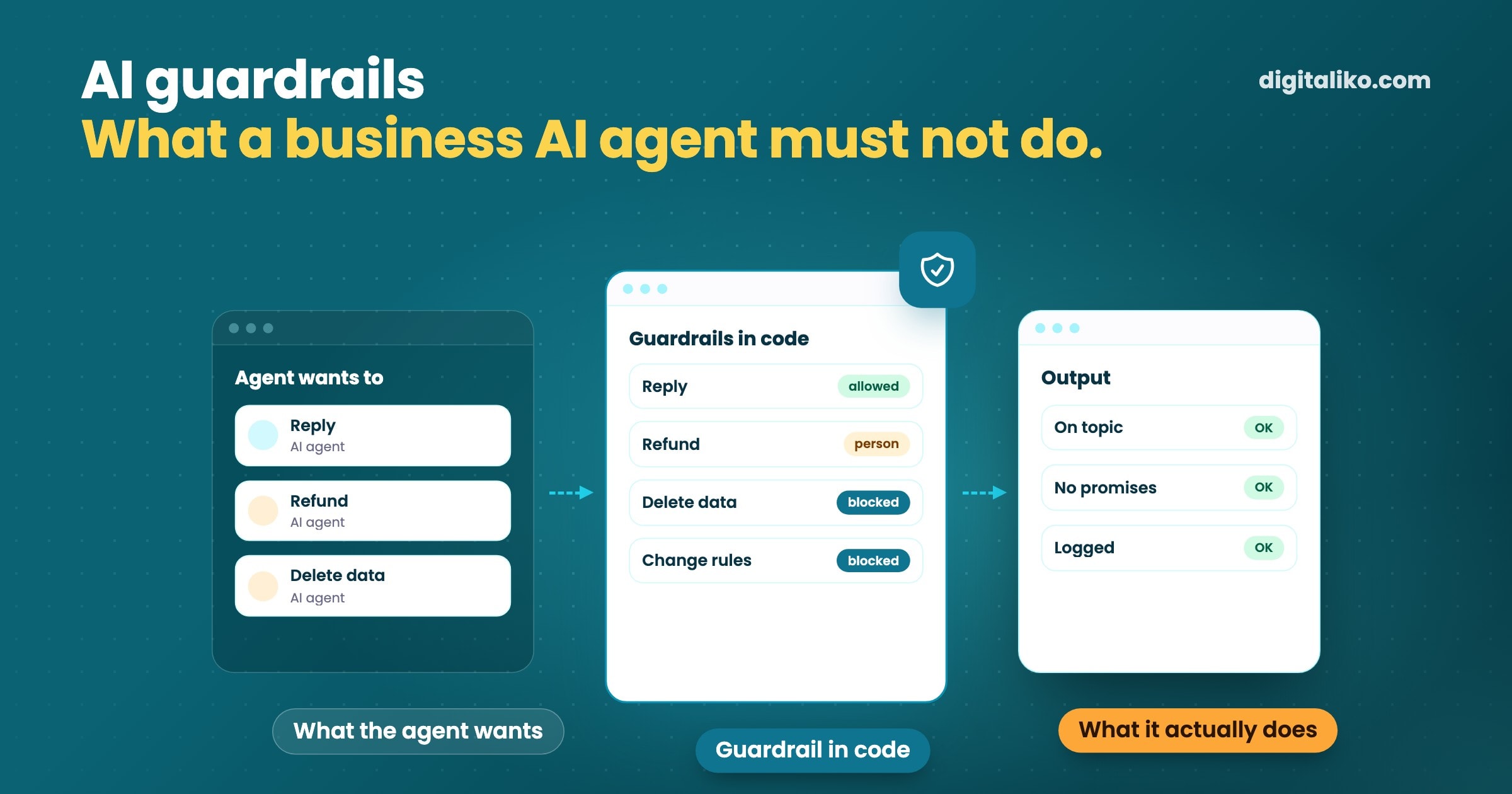
AI guardrails: what a business AI agent must not do
AI guardrails are rules and checks that decide what an AI agent may and may not do. The difference between an instruction in the prompt and a guardrail in code, 7 things a business agent must not do alone, and what to ask a supplier.
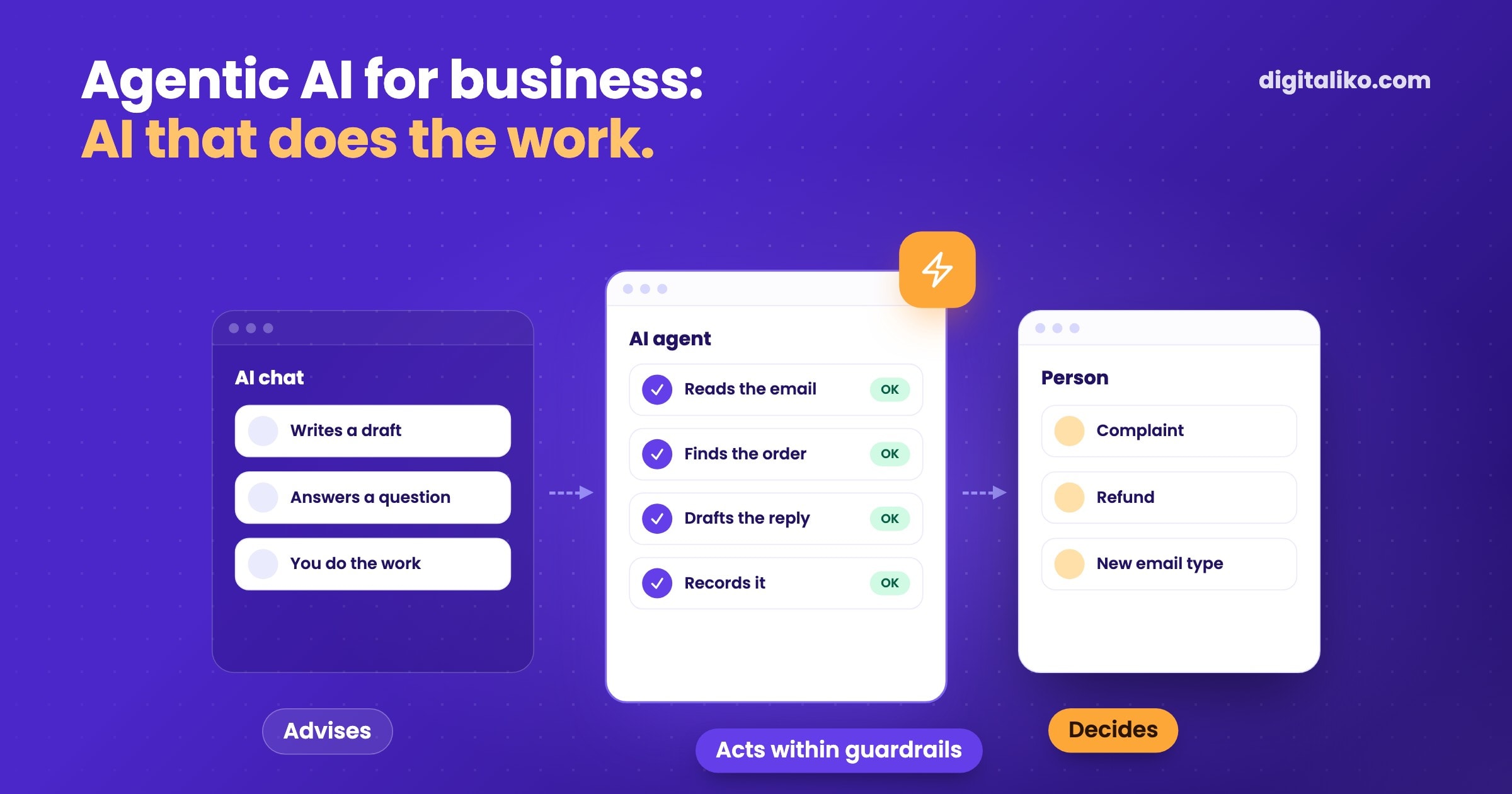
Agentic AI for business: what it is and what it means
Agentic AI is AI that does not just answer but does the work itself, within the guardrails you give it. How it differs from generative AI and automation, where it pays off for a business and what to prepare before you let an agent in.
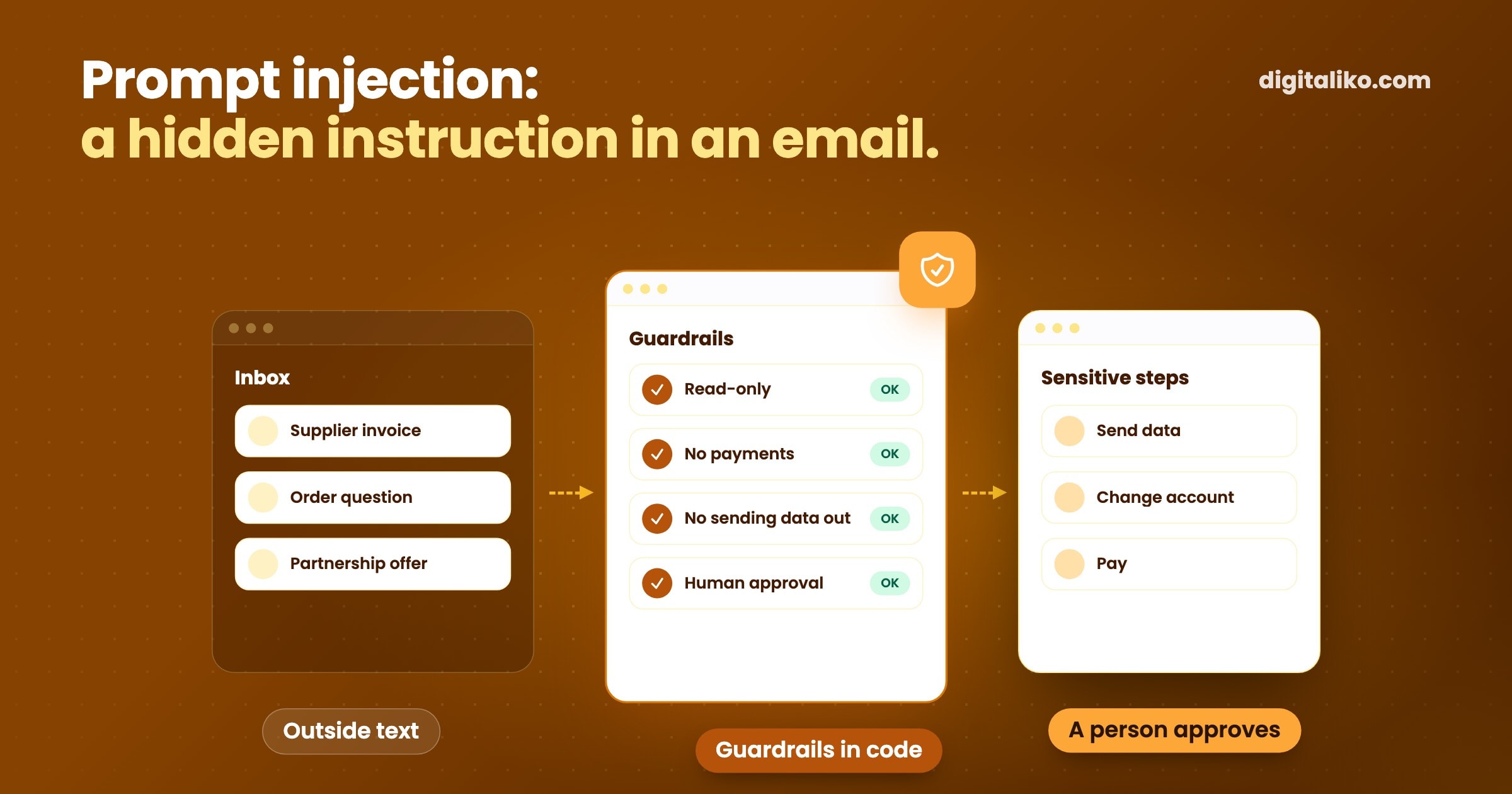
Prompt injection: how to protect an AI agent at work
Prompt injection is an attack in which someone hides instructions for the AI in an email, document or web page, and the agent follows them. Why it is more serious for agents than for chatbots, what lowers the risk and what to ask a vendor.
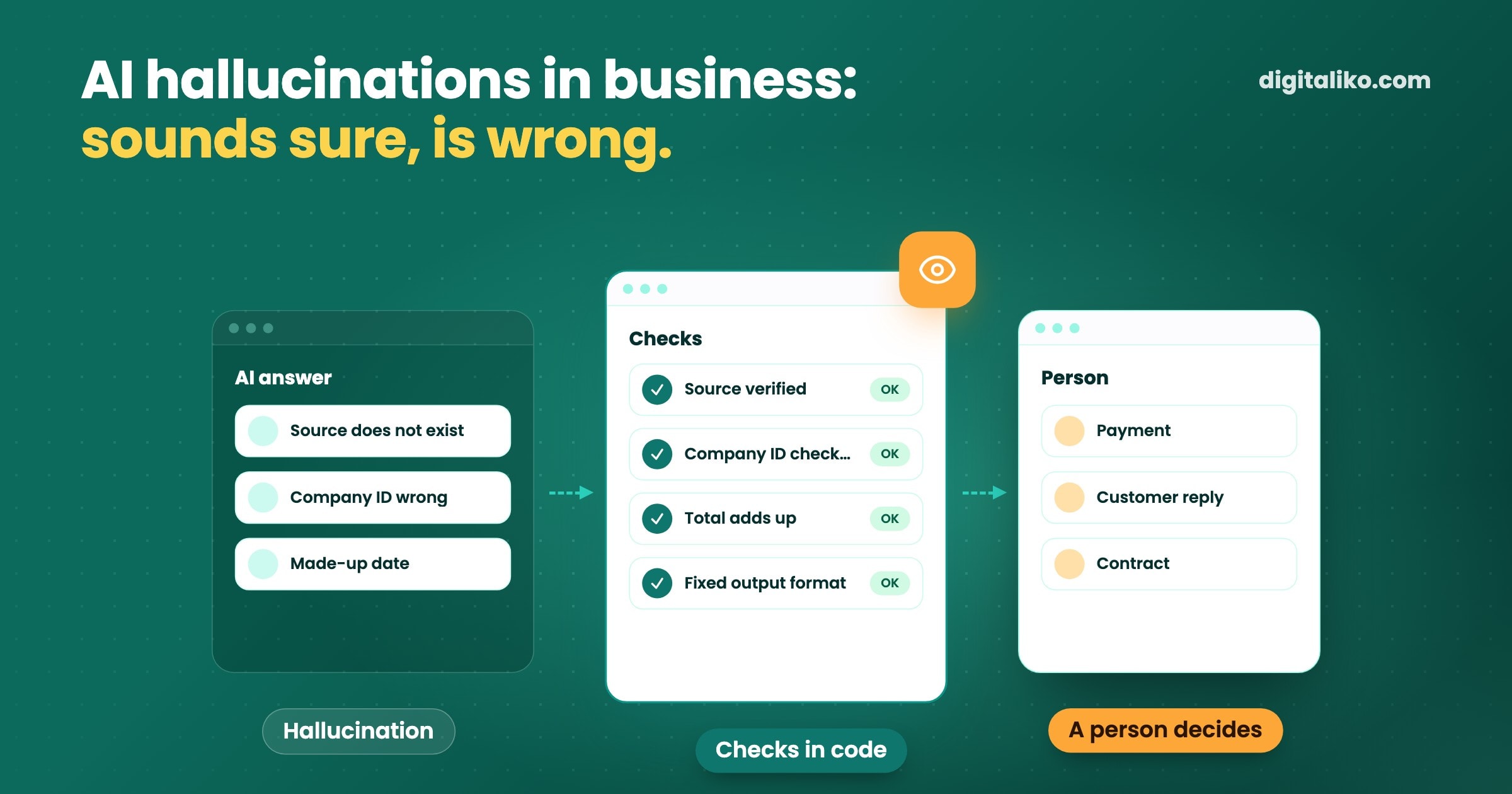
AI hallucinations: why AI makes things up, how to limit it
An AI hallucination is an answer the model made up but presents confidently as fact. Why it happens, where it is cheap and where it is expensive in a business, and how to limit it: sources, checks in code and a person on important steps.
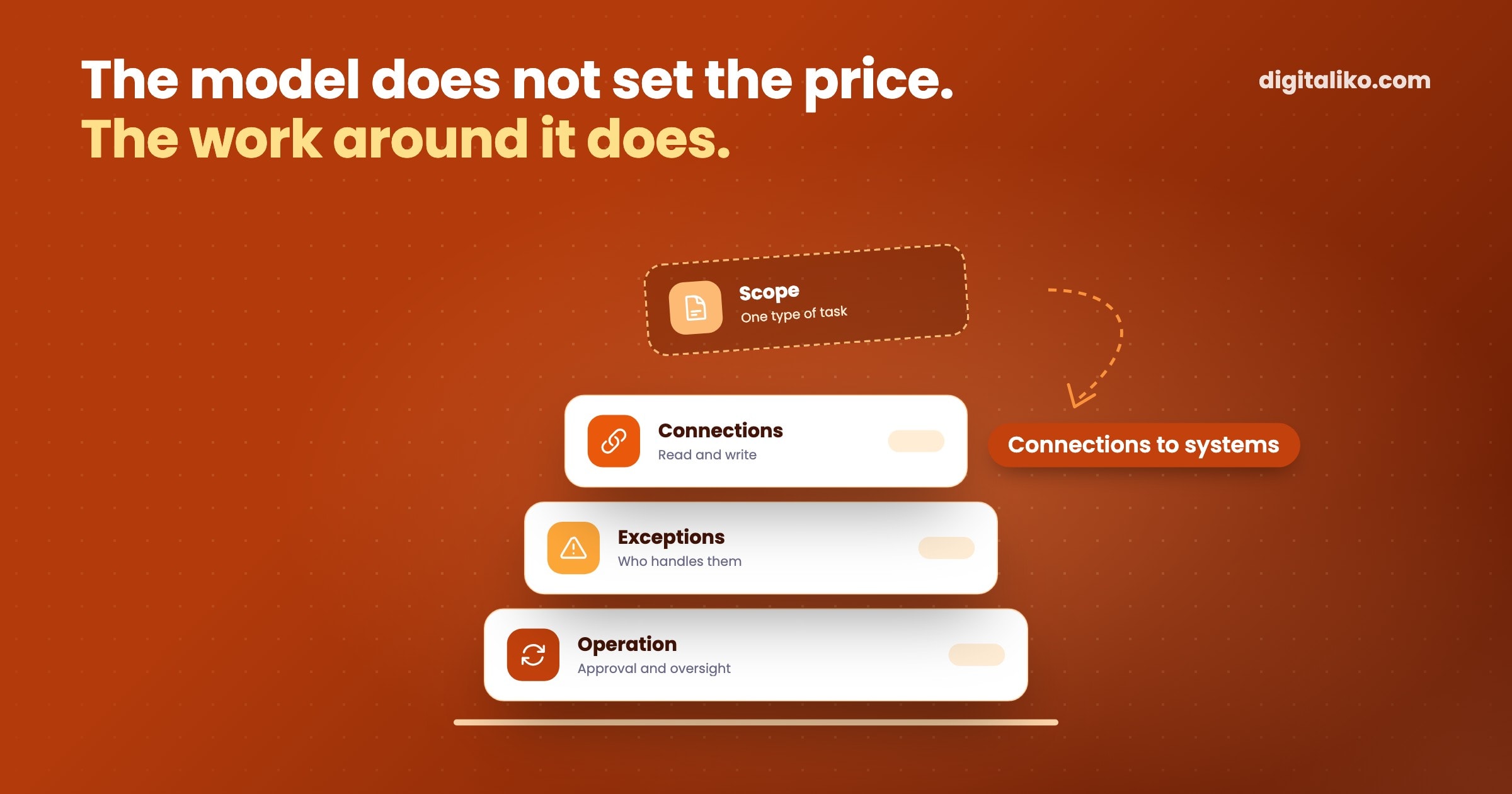
How much does an AI agent cost for a business?
With us, an AI agent for a business is part of a subscription from €3,980 a month excl. VAT, or a fixed price. Scope, connections and operation set the price, not the model.
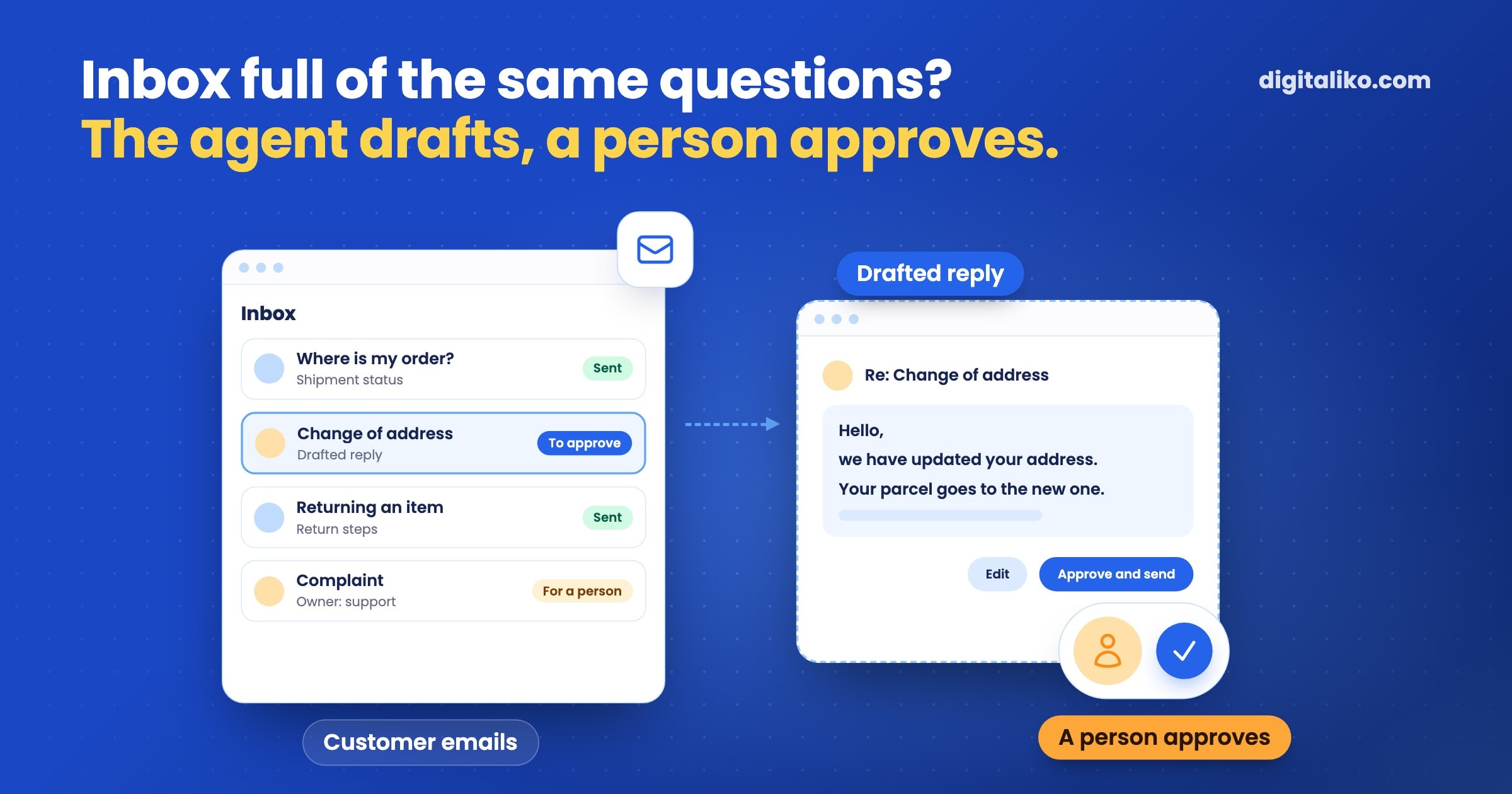
AI agent for customer emails: where to start
An AI agent for customer emails works when you introduce it in three steps: understand the mail, drafts with approval, and only then on its own. For a client with online sales: a reply within 5 minutes.
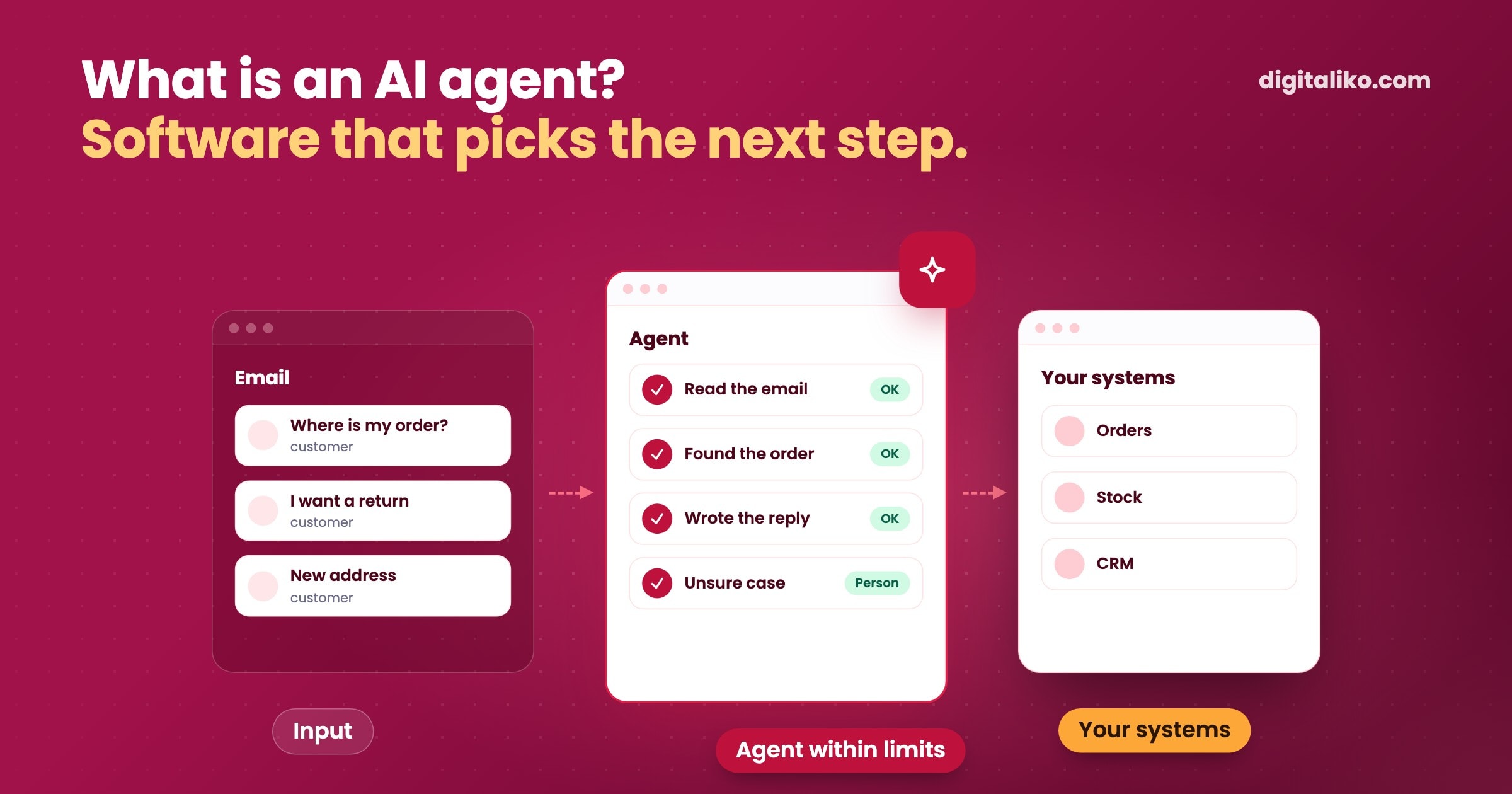
What is an AI agent? Plain answer, business examples
An AI agent is software that gets a goal and picks the next step itself, within the limits you set. How it differs from a chatbot and from automation, a real example with numbers, and when you do not need one.
Automatización de procesos
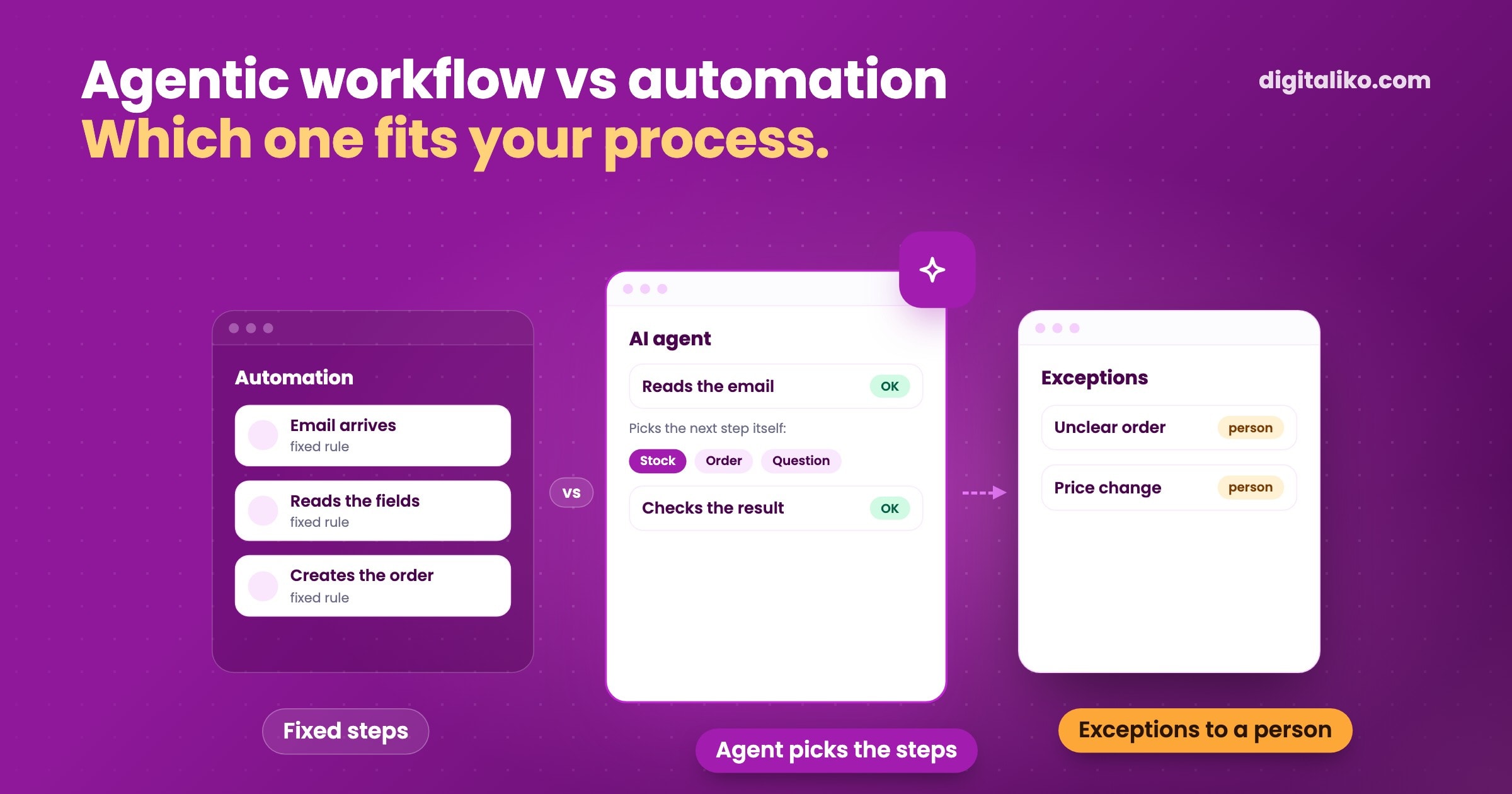
Agentic workflow vs automation: which fits your process
An agentic workflow is a process in which an AI agent picks the next step itself. Classic automation follows fixed steps. A test for when rules are enough, when you need an AI step and when an agent, with an example from our own accounting.
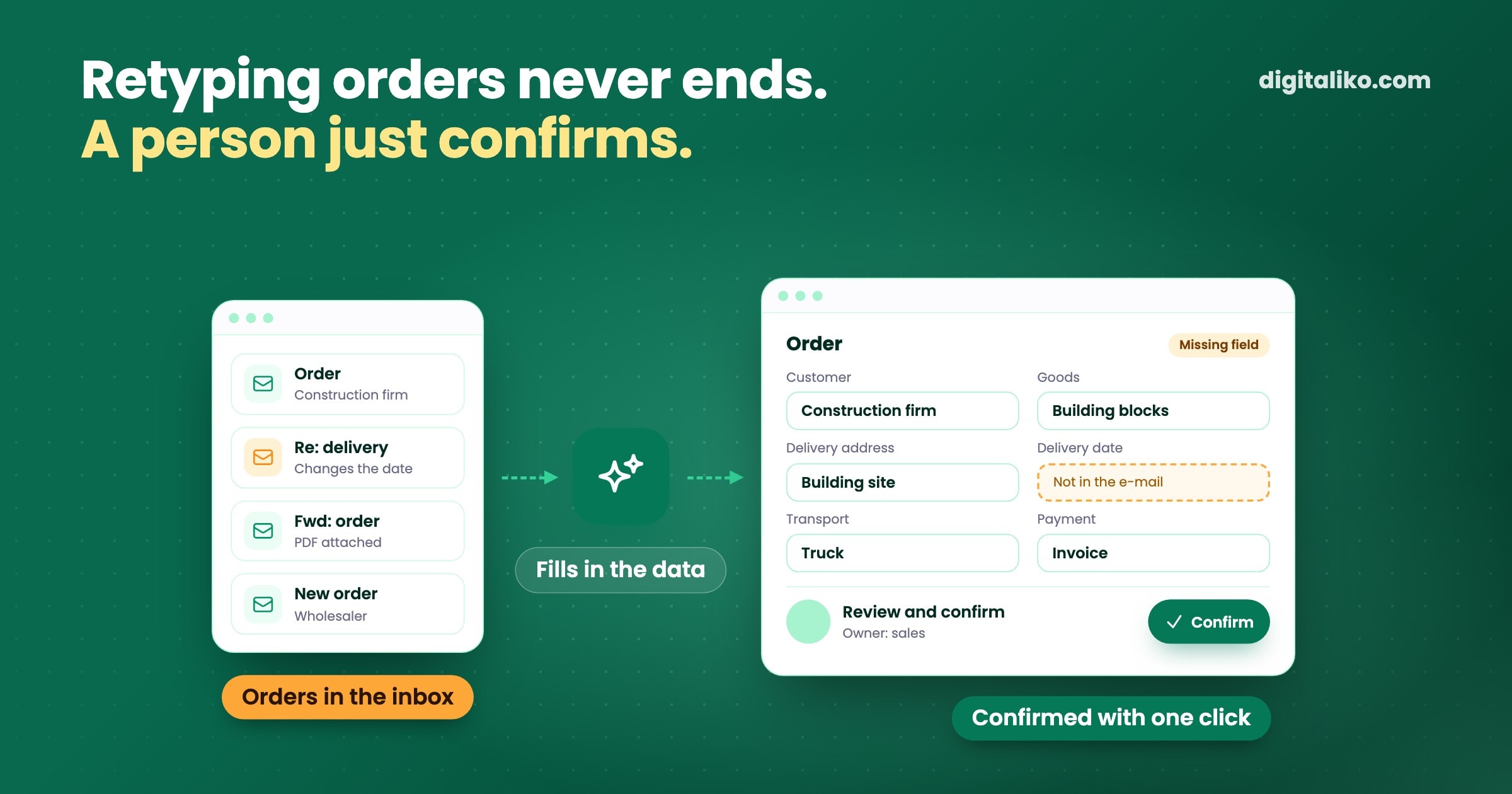
How to automate order processing from email
AI reads the order email, fills the data into your system, and a person only confirms it. Once checking stops finding errors, selected types go through on their own. The process, a field table and what we learned in freight forwarding.
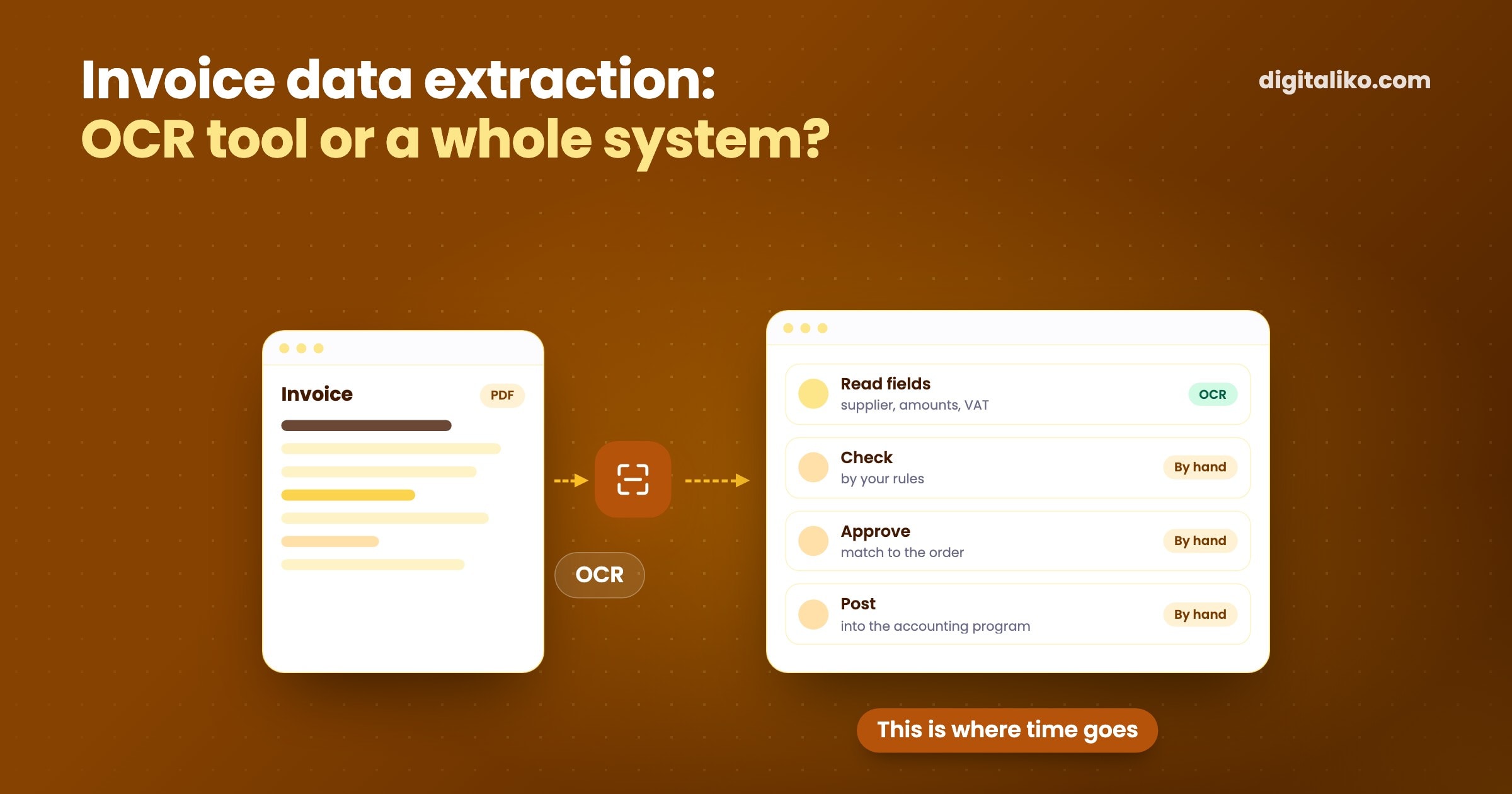
Invoice data extraction: OCR tool or a whole system?
An invoice extraction tool reads the PDF, but approval, matching and posting often stay manual. How to measure where the time goes, when OCR is enough and when you need end-to-end automation.
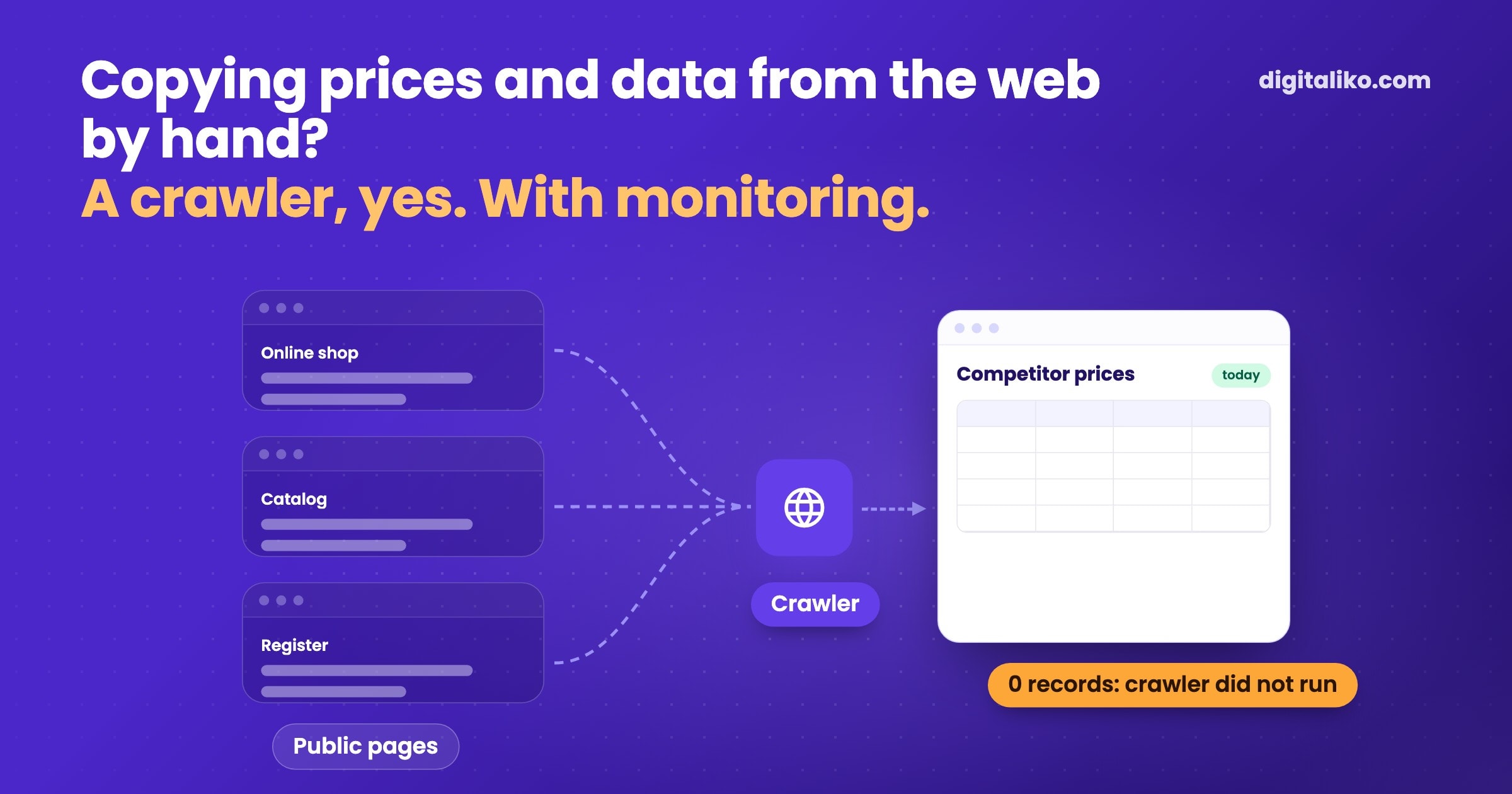
Web scraping for business: when a crawler pays off
Competitor prices, supplier catalogs and public registers can be collected automatically. When a crawler pays off, what breaks, what is legal and why it does not last without monitoring.
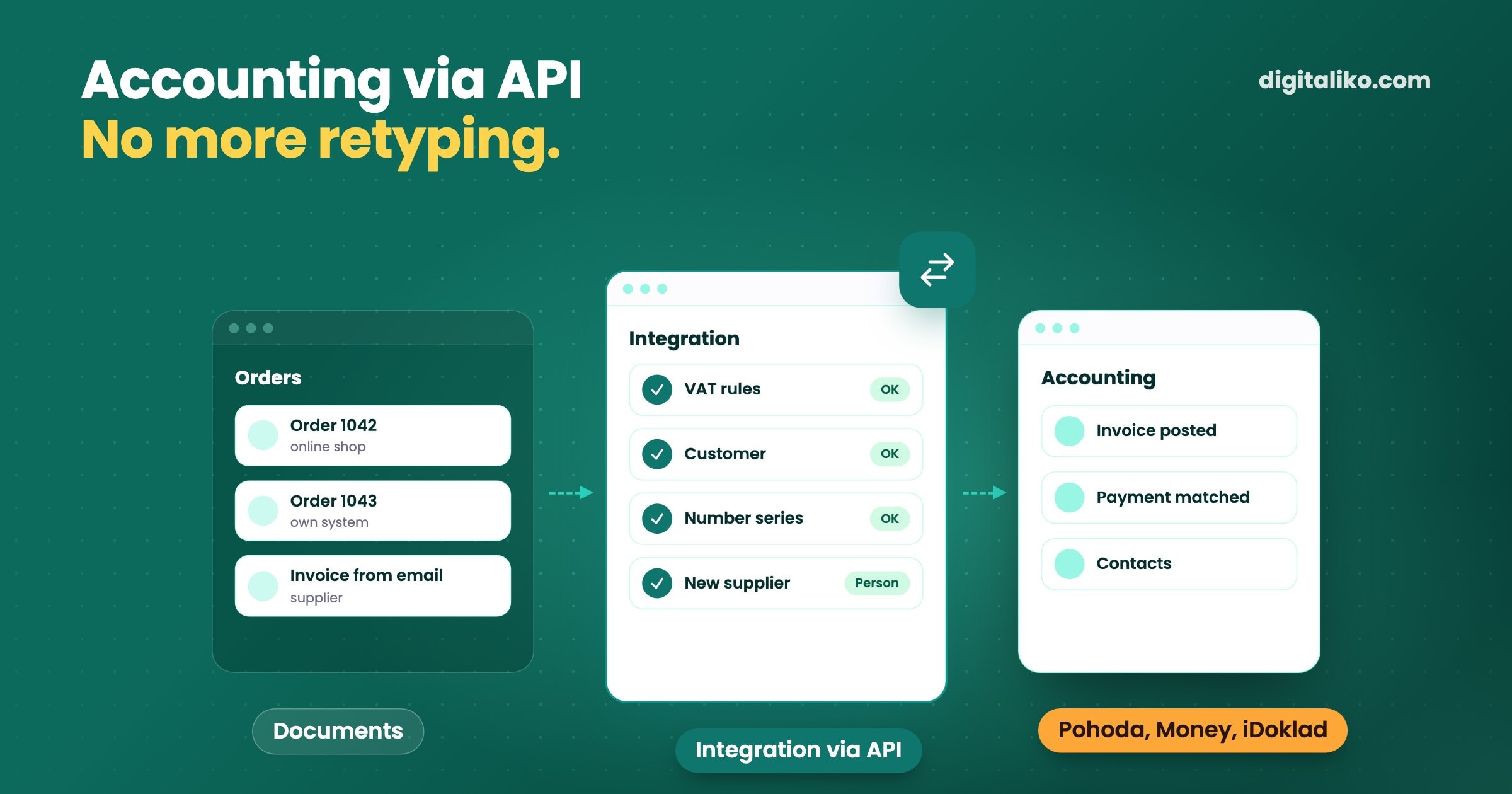
Pohoda API: connecting your system and who maintains it
Retyping invoices and orders into Pohoda, Money or iDoklad by hand? Accounting programs have XML or REST APIs, so they can be connected. What you can connect, where the hard part is, and who keeps it running.
De Excel a un sistema
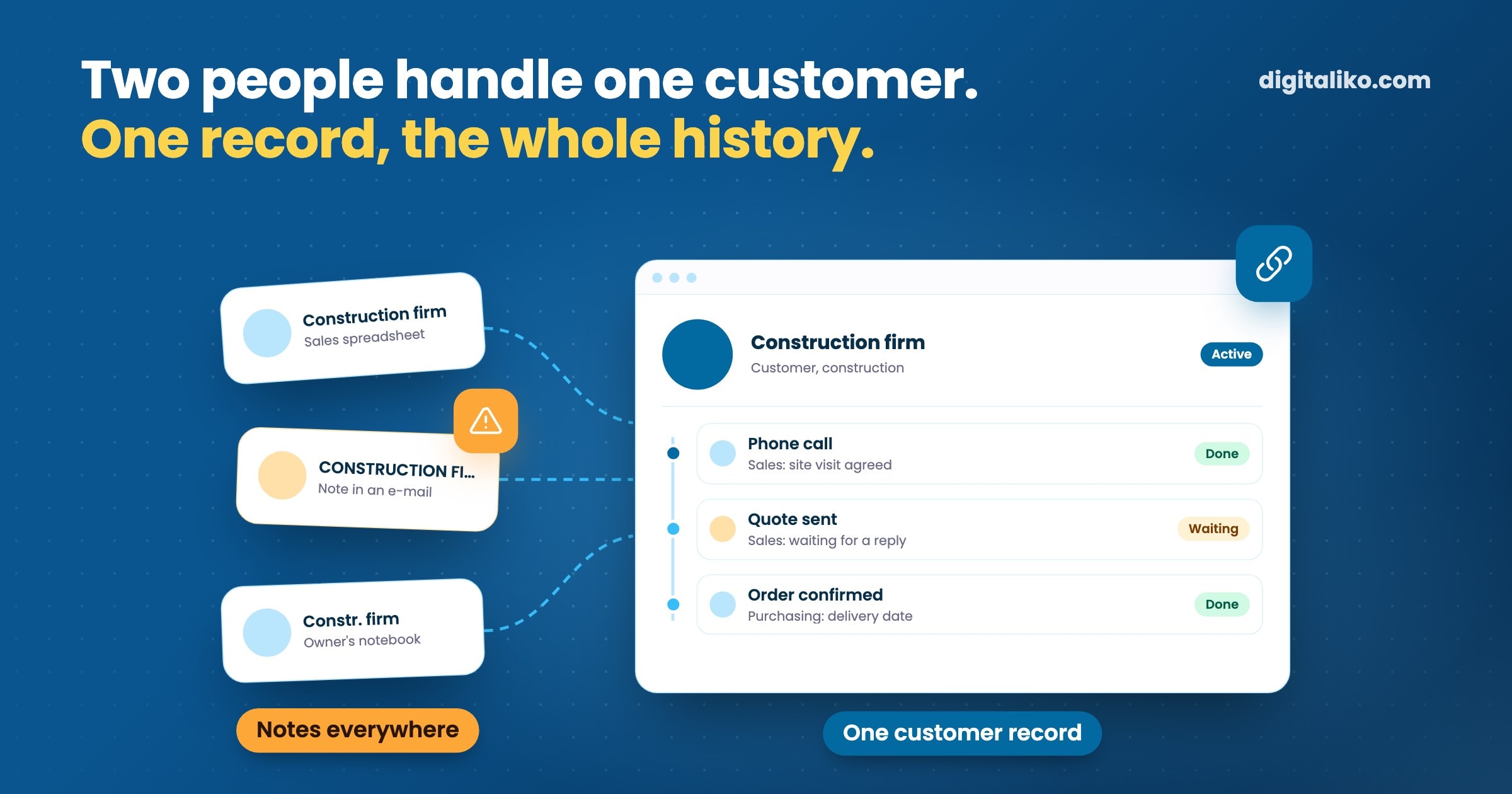
Excel as a CRM: where it breaks
Excel as a CRM works while one person handles each customer. It breaks with a second salesperson, a forgotten follow-up and emails outside the sheet. A structure that lasts, and when to move on.
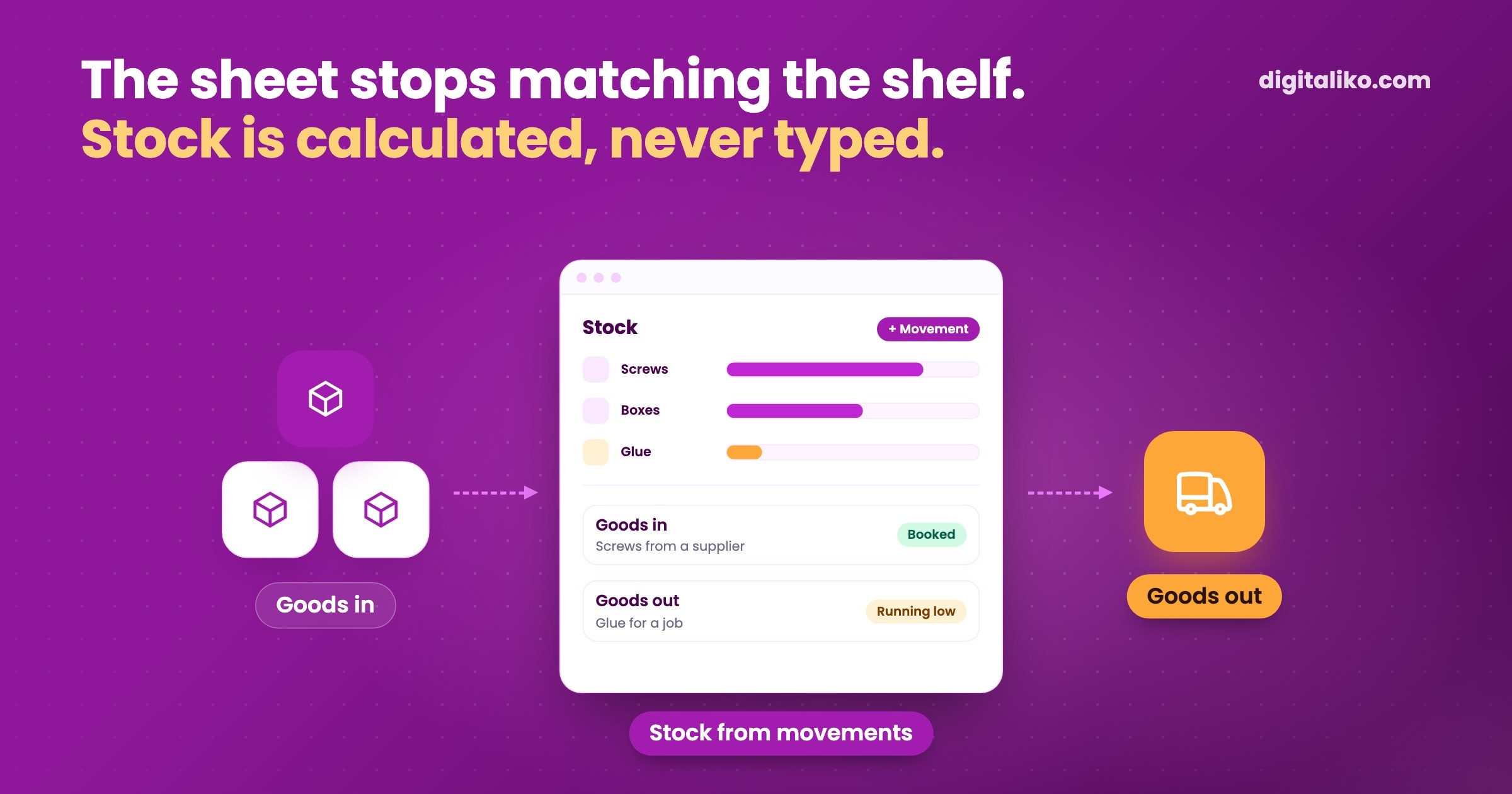
Inventory in Excel: when to switch to a system
Inventory in Excel works while one person moves the stock and logs every movement right away. A simple sheet structure that lasts, and 5 signs you need a system.
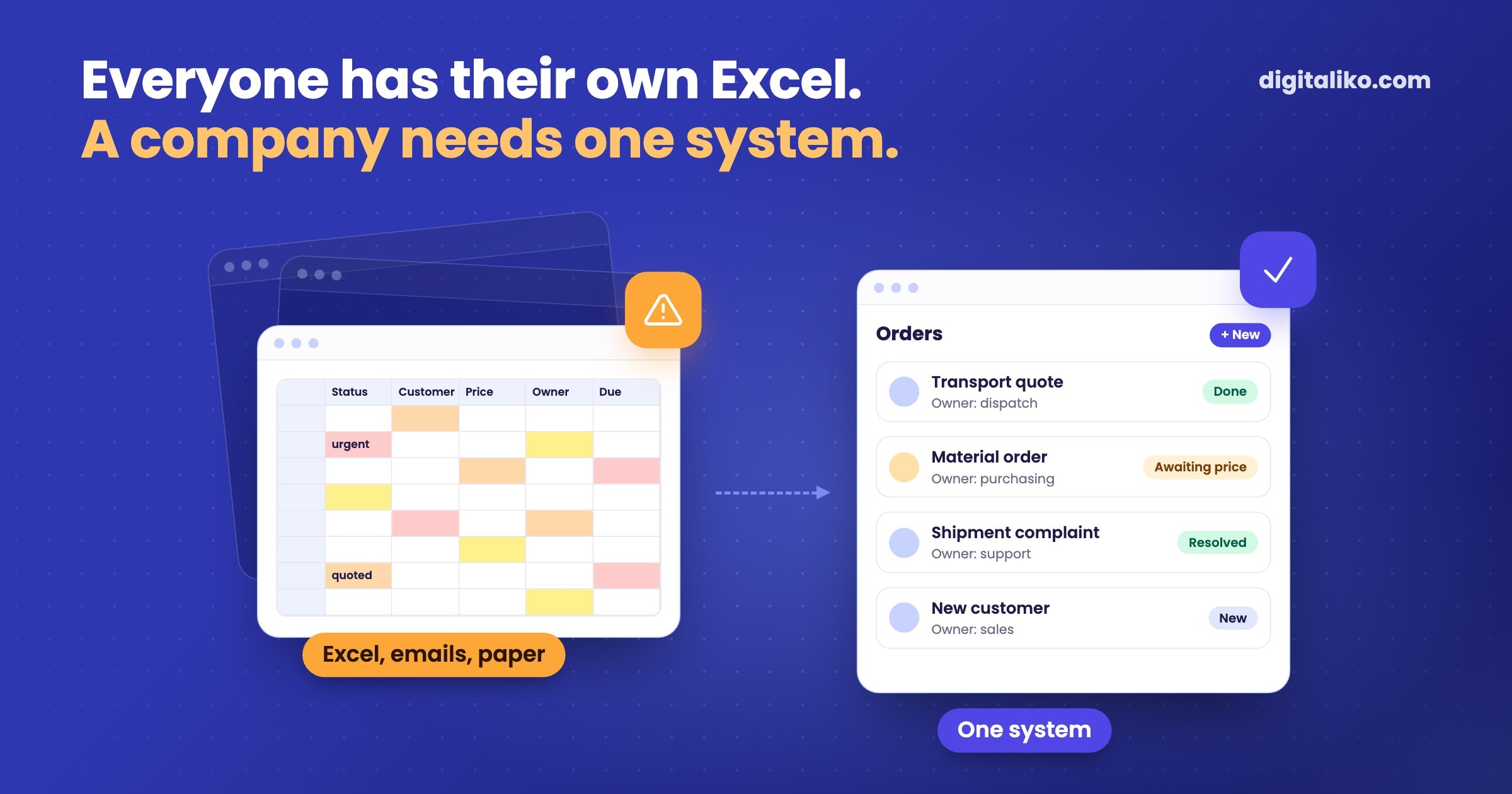
When is Excel no longer enough for a business?
Excel stops being enough when several people write into it at once and the process lives in colours and in one person's head. 5 signs, alternatives to Excel and what we learned in freight forwarding.
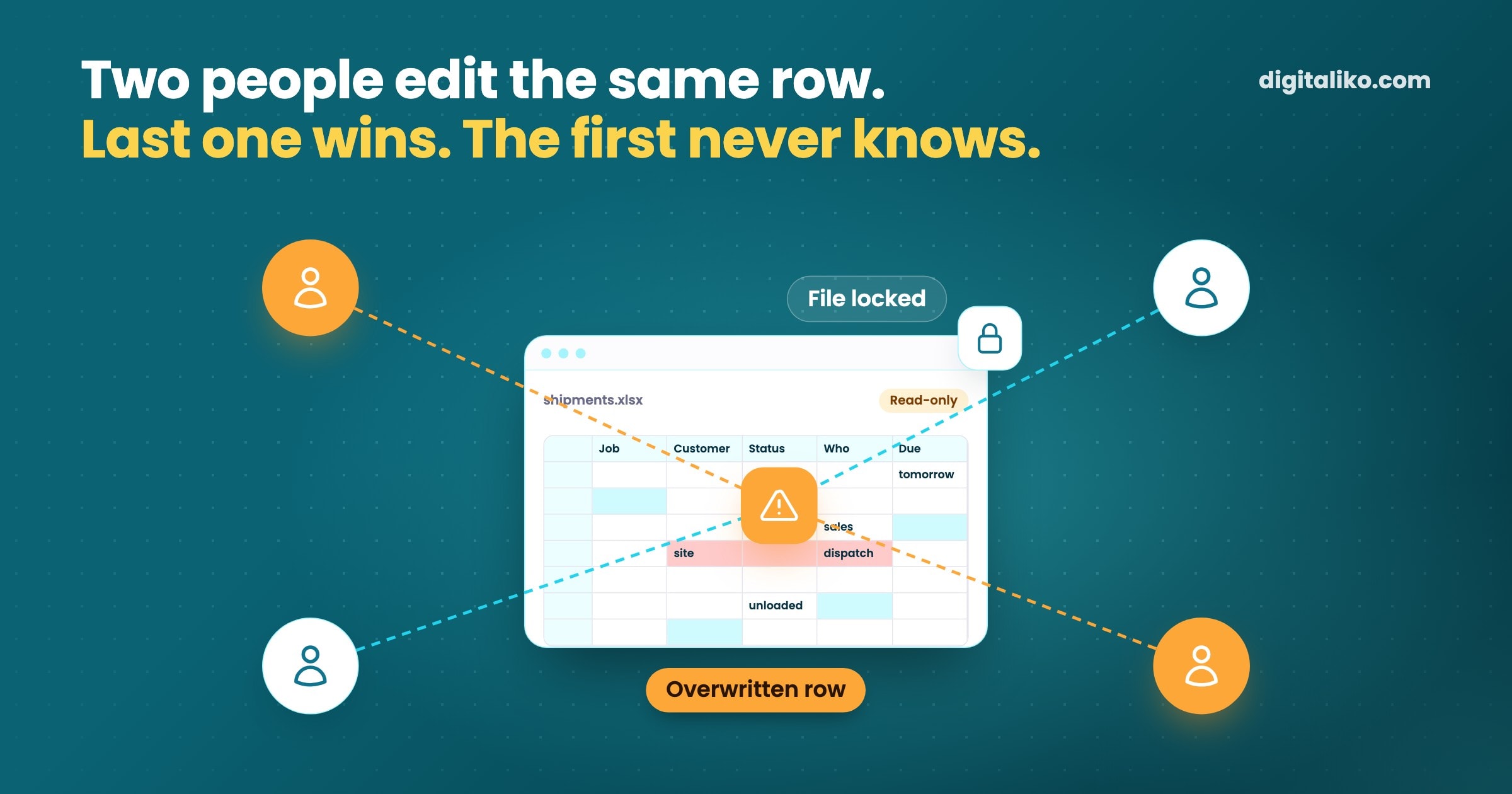
Shared Excel for multiple users: why it breaks
Shared Excel works through OneDrive or SharePoint in Microsoft 365. It breaks on edits to the same row, an old Excel version and different permissions. What co-authoring solves and what it does not.
Propiedad del software y proveedores
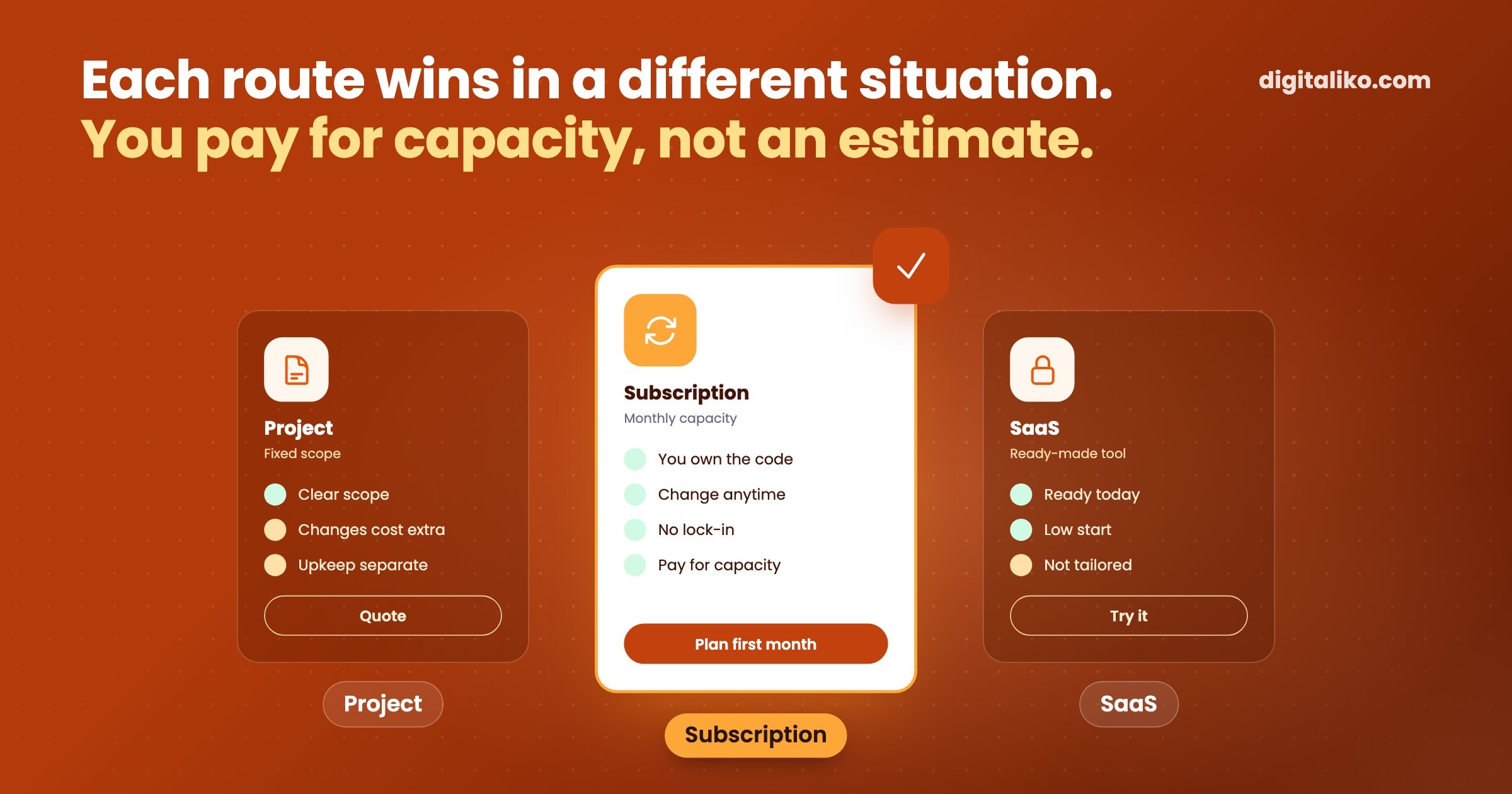
How much does custom software cost?
The cost of custom software depends on the number of processes, integrations, data migration and who runs it. With us from €3,980 a month, or a fixed price for a bounded scope. Compared with projects and SaaS.
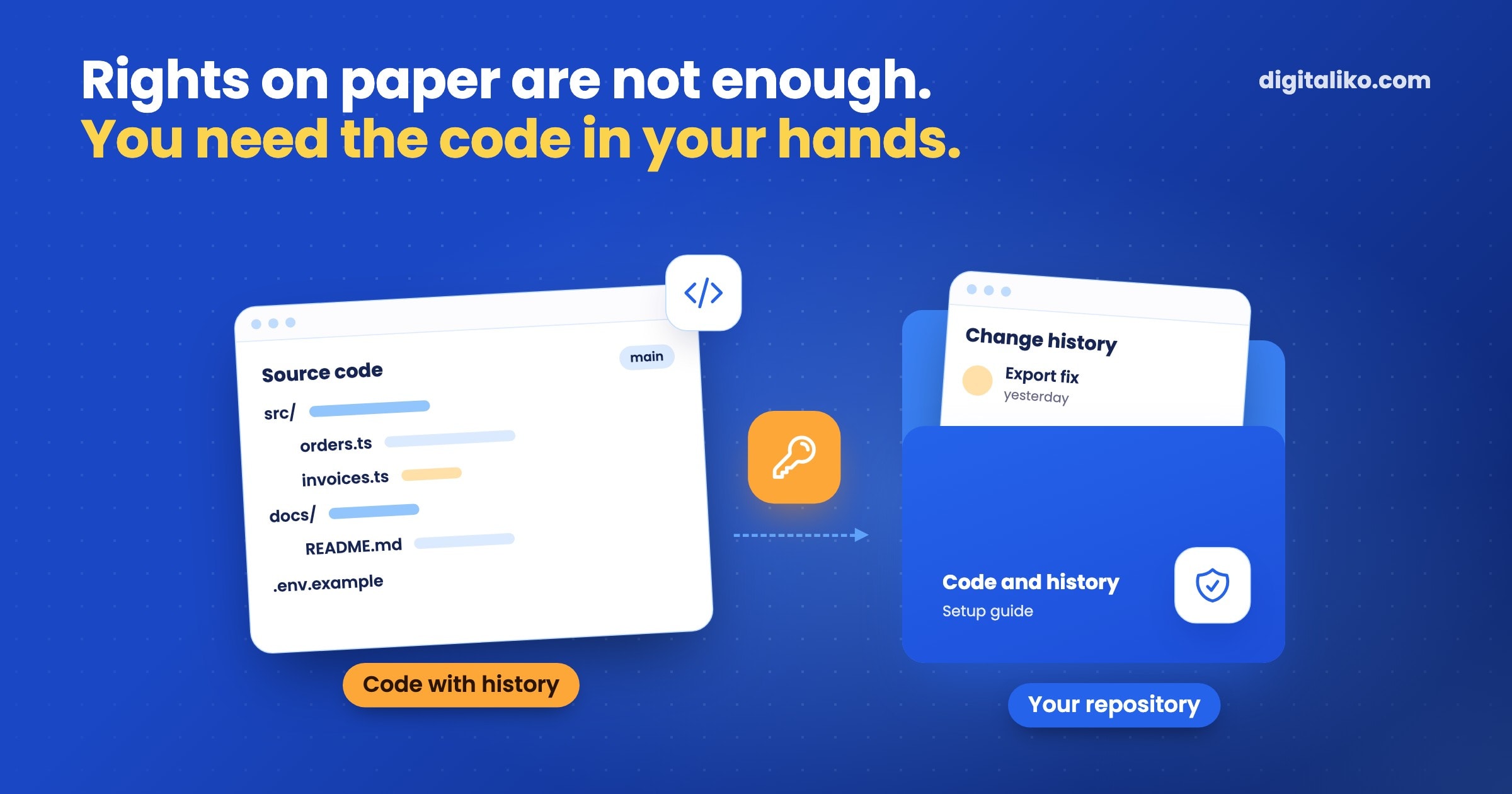
Who owns the source code of custom software?
Under Slovak copyright law, the client usually exercises the economic rights to software made to order. But rights are not the same as having the code. What to check in the contract and at handover.
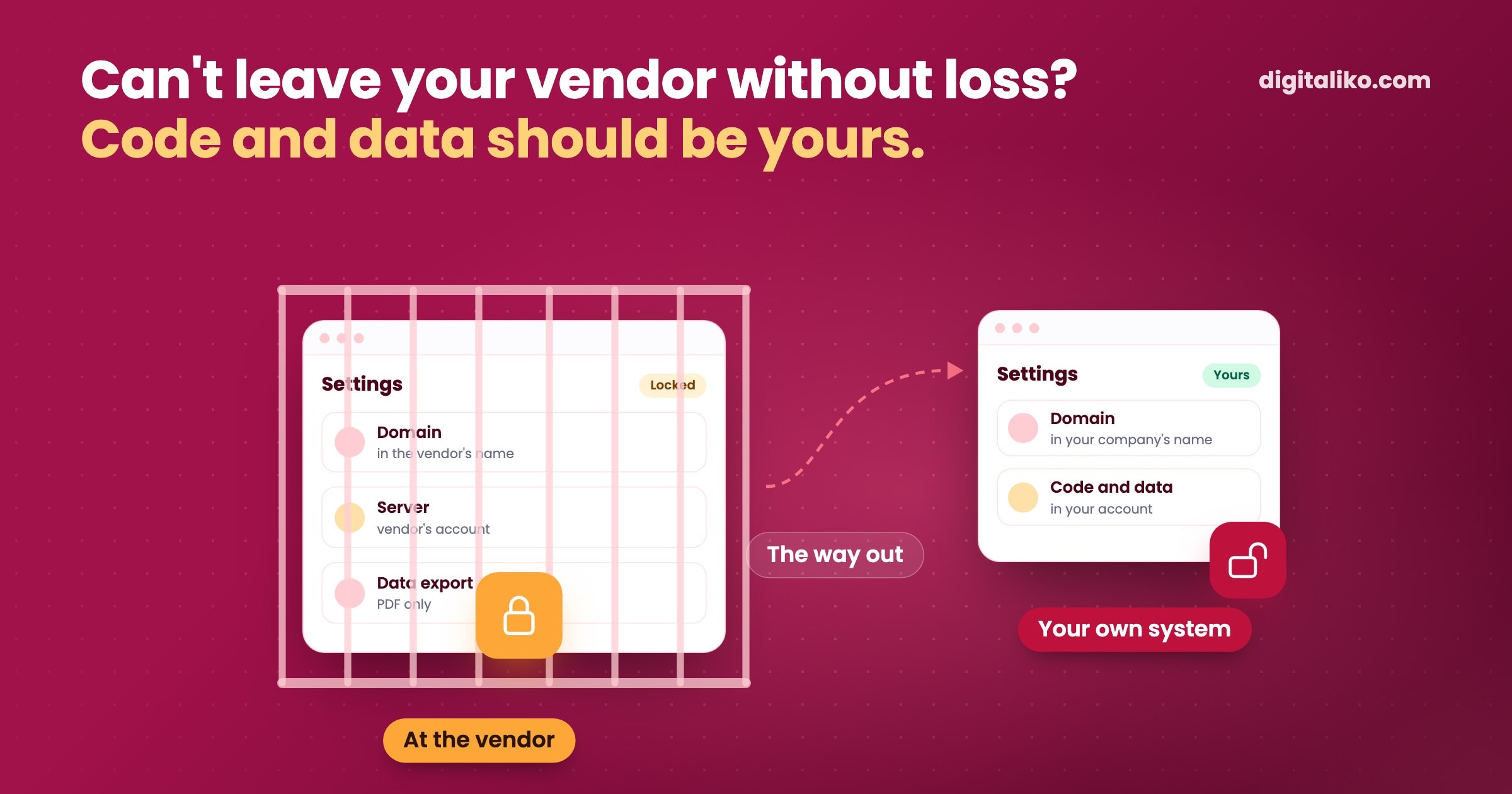
Vendor lock-in: how to tell you are trapped
Vendor lock-in means you cannot leave a software vendor without losing data, money or time. 8 signs, when lock-in is fine, and what a contract you can walk away from looks like.
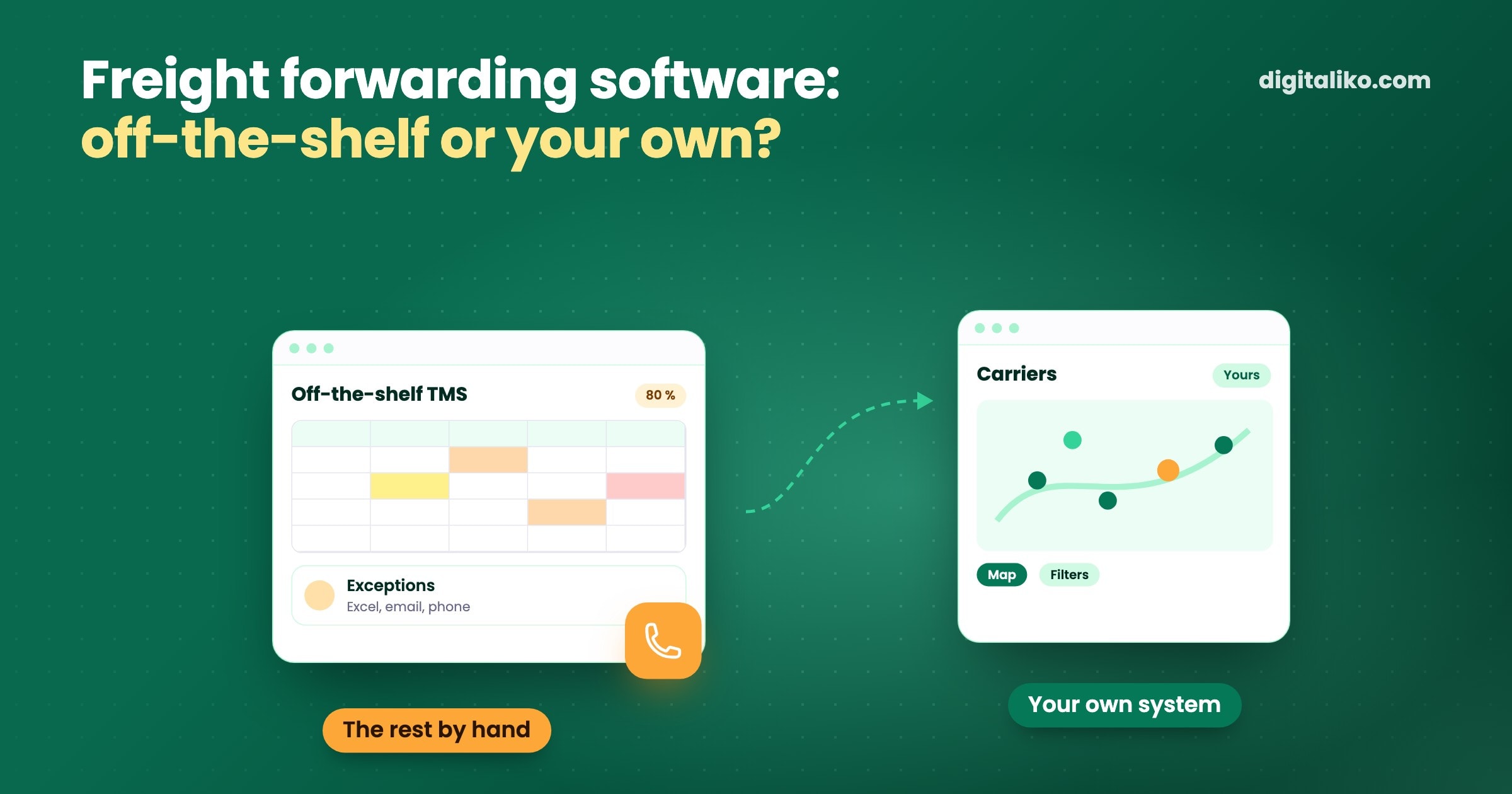
Freight forwarding software: off-the-shelf or your own?
An off-the-shelf TMS is enough while you work like most forwarders. When the way your dispatchers work is your edge, the box holds it back. A comparison, 5 questions to decide and when not to build your own.
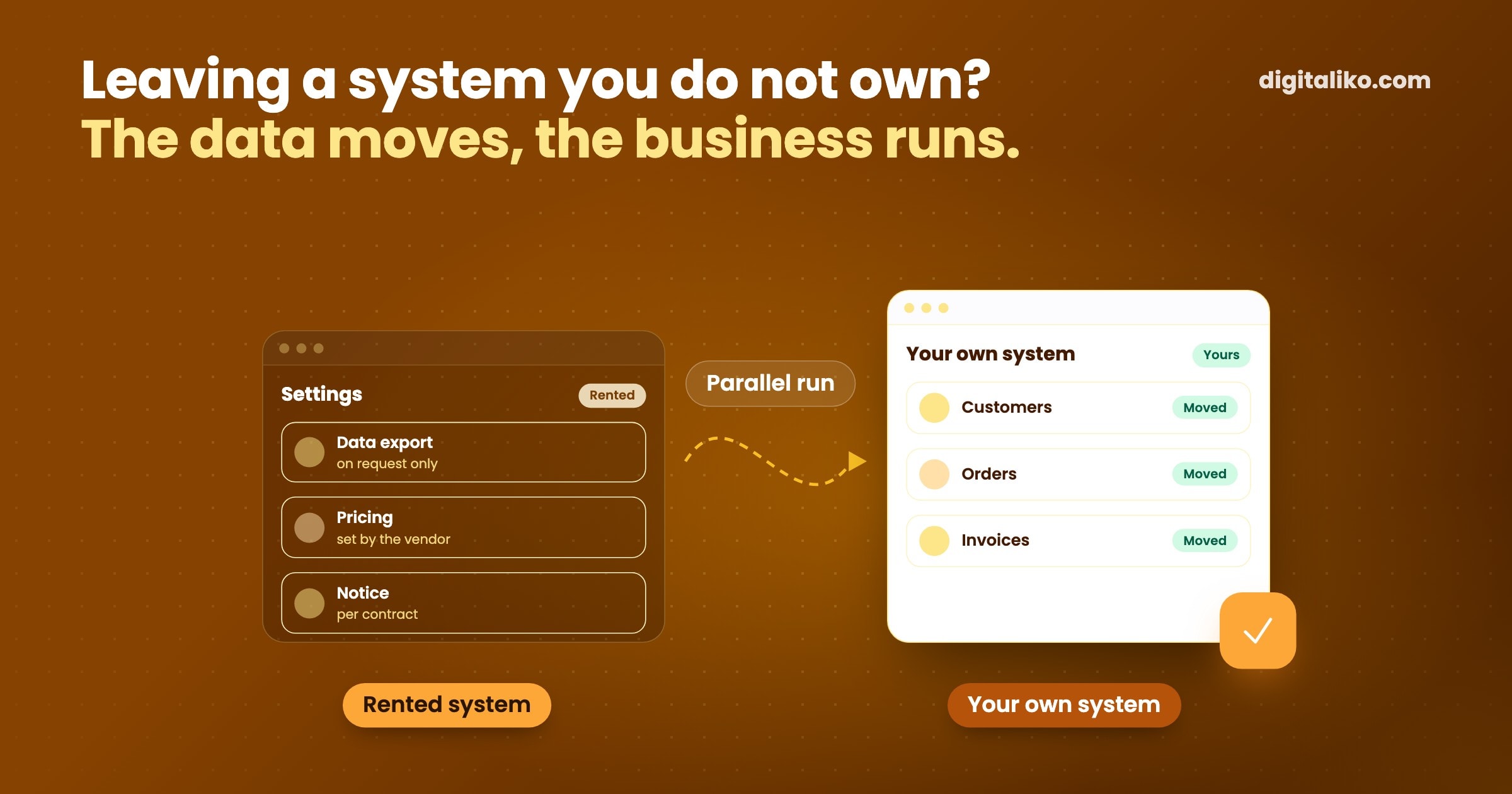
Migrating data from SaaS to your own system, no downtime
How to leave a system you do not own: what to check in the contract, how to get your data out and how to switch without downtime. Five steps.
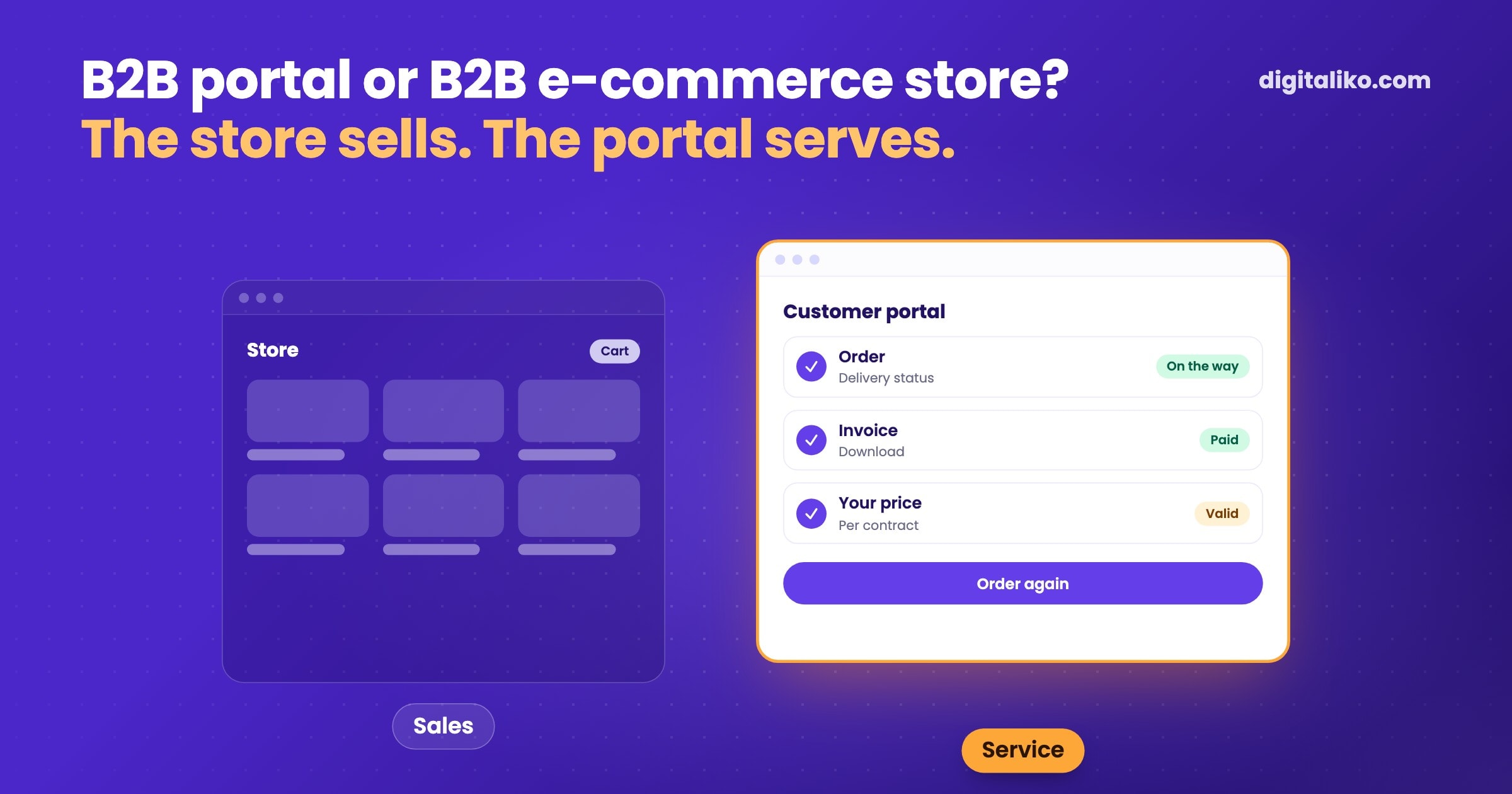
B2B portal or B2B e-commerce store? How to choose
A B2B e-commerce store sells to new business customers. A B2B portal serves the ones you already have: their prices, orders, delivery status and invoices. Comparison, self-test and what drives the cost of a portal.
Para fundadores
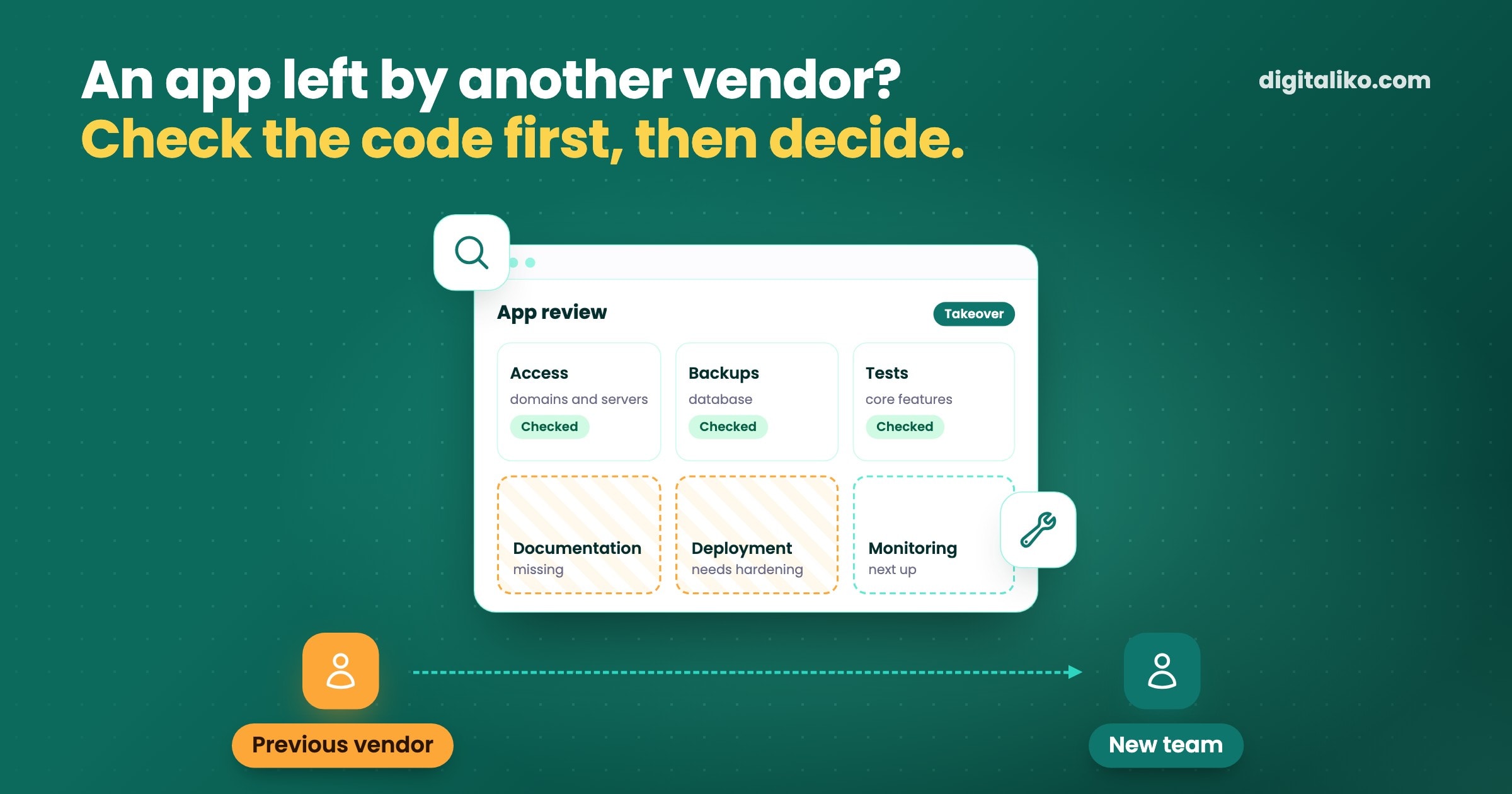
How to take over an app from another vendor
You take over an app from another vendor in three steps: secure the code, access and data, have someone look into the code, and only then decide. A checklist and the three possible verdicts.
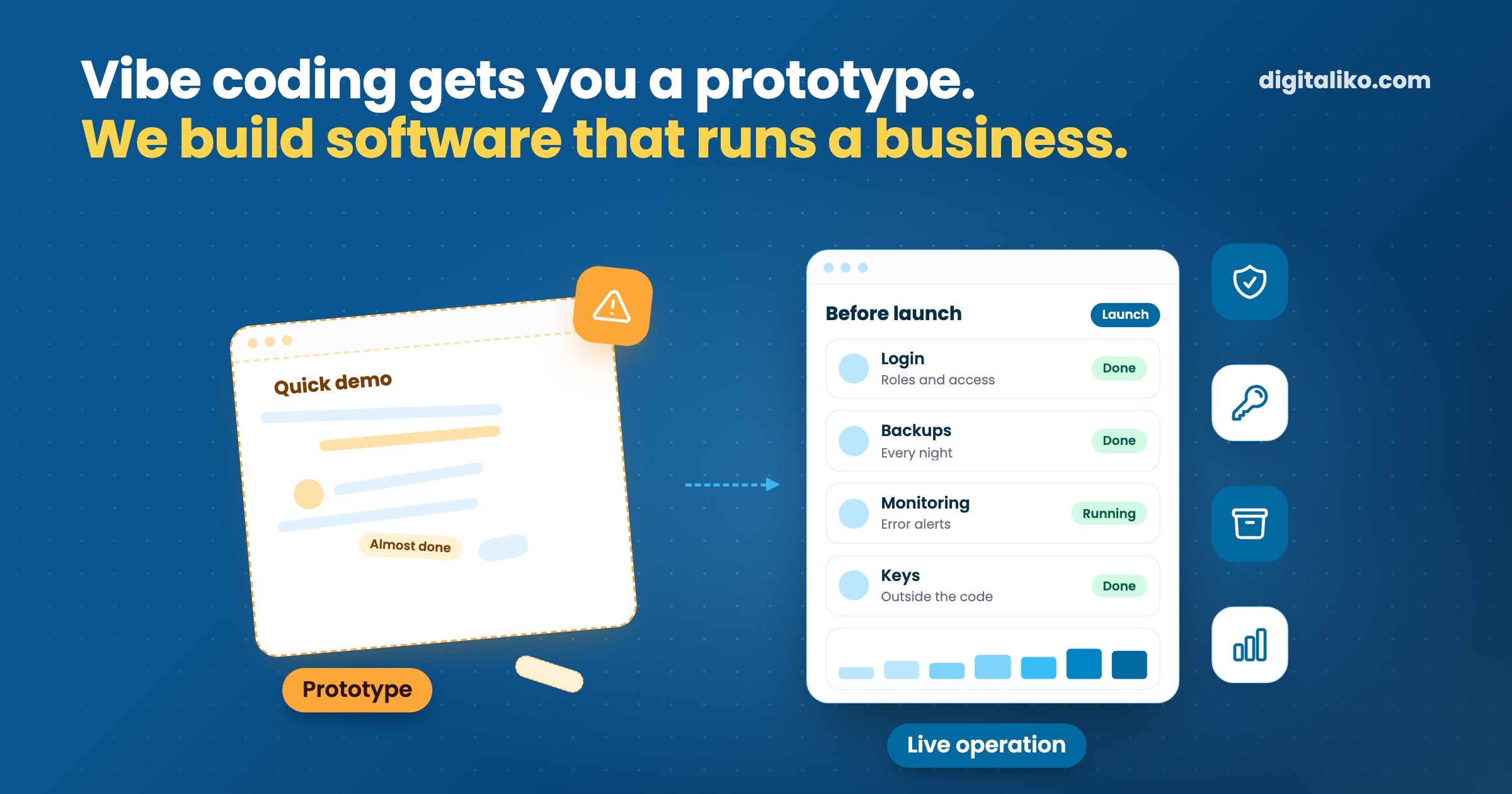
Vibe coding to production: what the prototype is missing
A vibe-coded prototype gets to production once you add security, backups, repeatable deployment, tests and monitoring. What is missing, how to check it and when to start over.
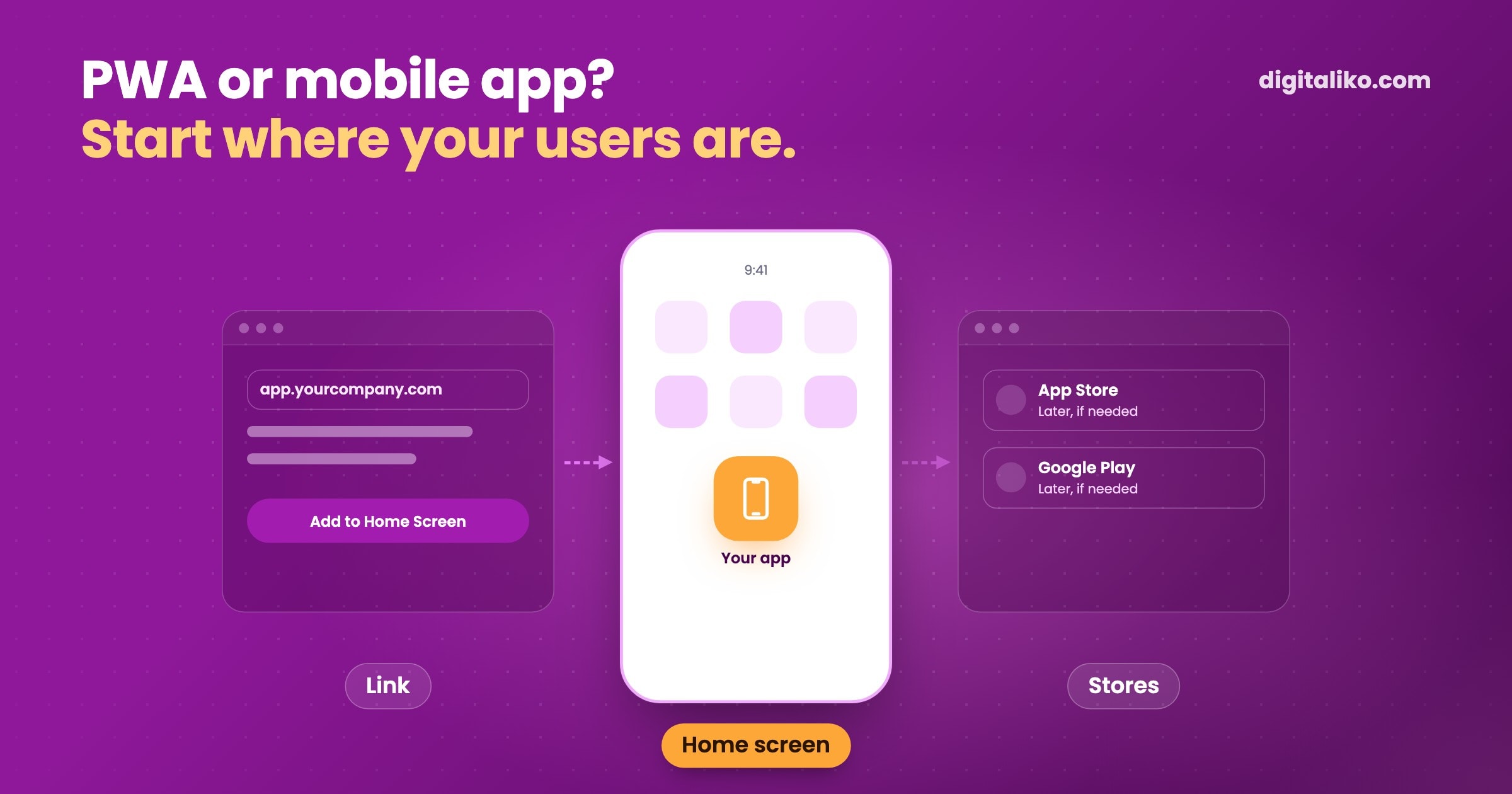
PWA vs native app: which one does your business need?
A PWA is enough when the people using the app get it from a link you send. Go to the App Store and Google Play when new people should find you there or you need features the web lacks. Comparison, self-test and how to start.
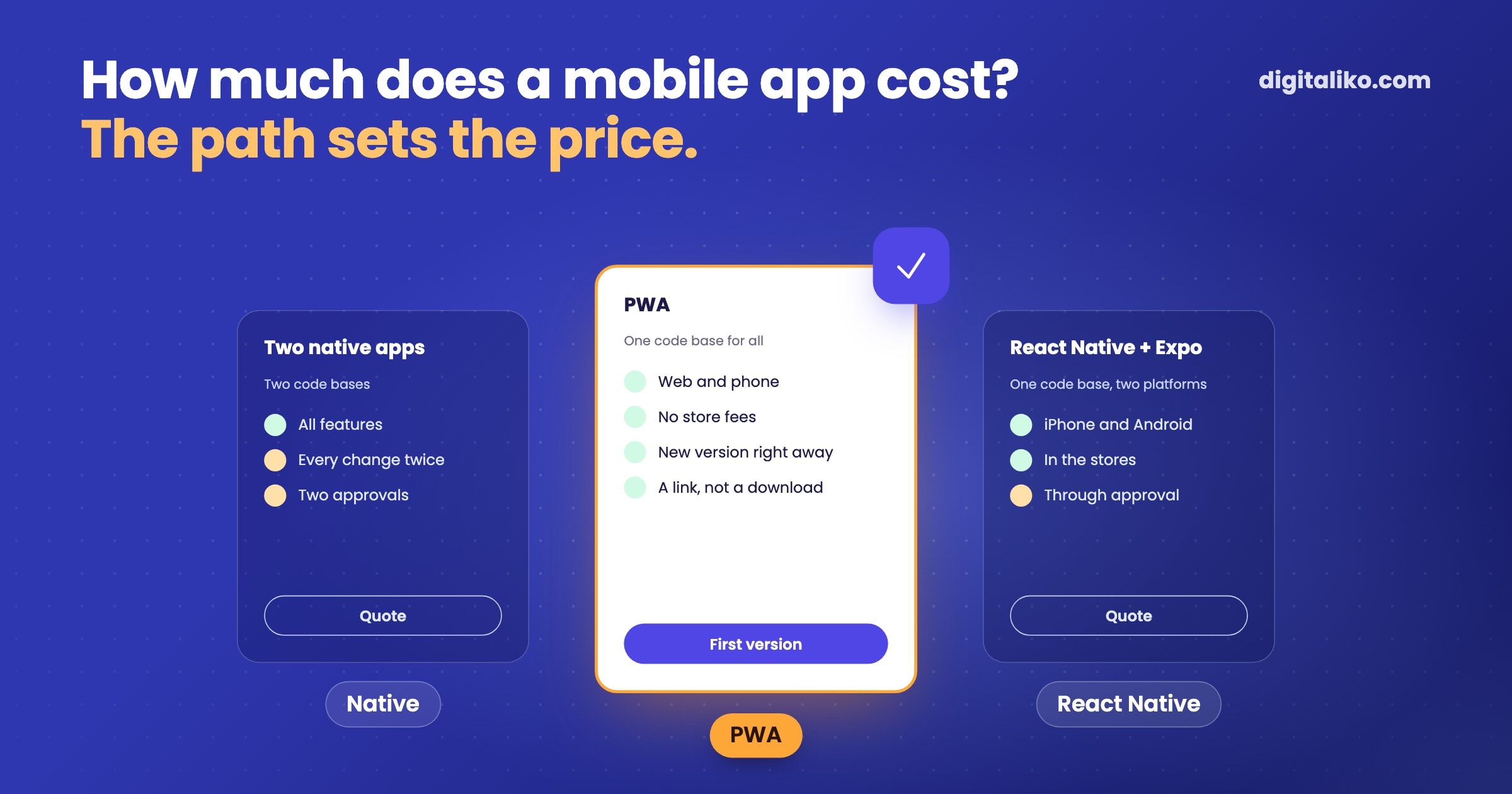
Mobile app development cost: what drives the price
Mobile app development cost depends on the path (PWA, React Native with Expo, or native), the scope of the first version and operations after launch. With us from €3,980 a month, or a fixed price per project.
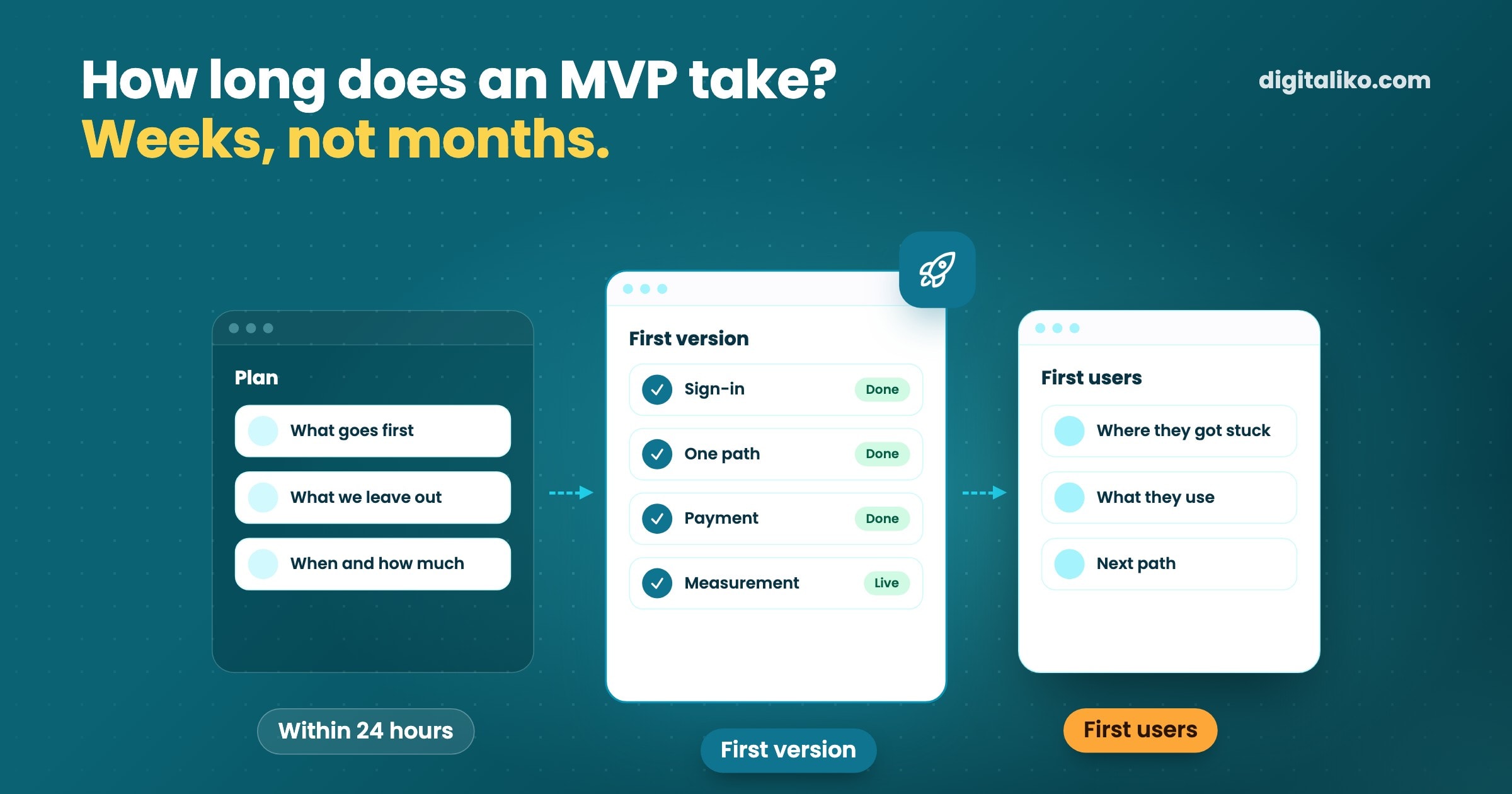
How long does MVP development take? What goes in v1
The first usable version of an MVP should take weeks, not months. What goes into it, what does not, what a sensible timeline looks like and how to spot a badly set scope.
Tendencias y lo que significan para usted
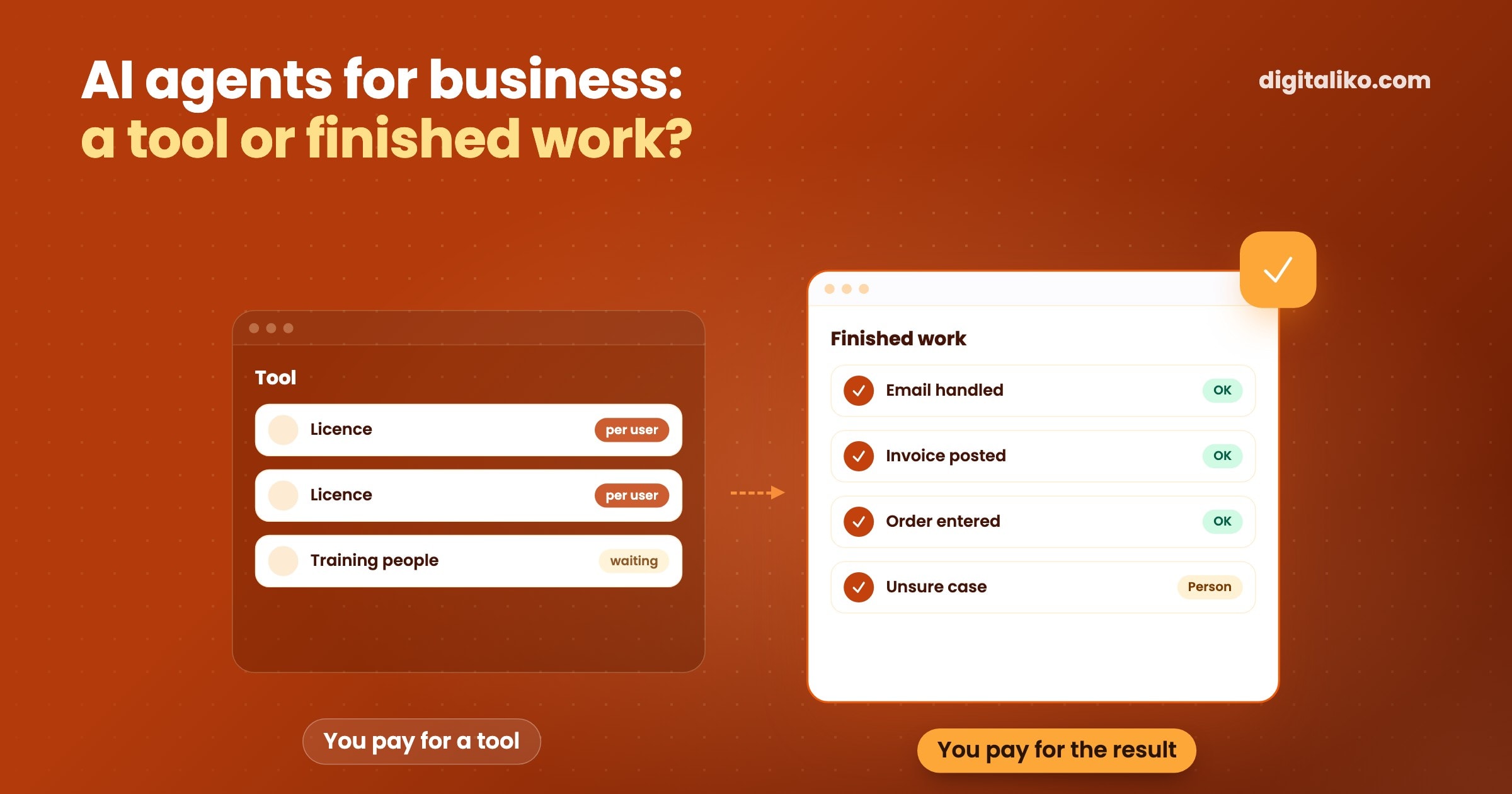
Pay for an AI tool, or for finished work?
You can pay for an AI agent as a tool your person operates, or for finished work. What Sequoia writes about it, where we agree, where we do not, and a real example with numbers.
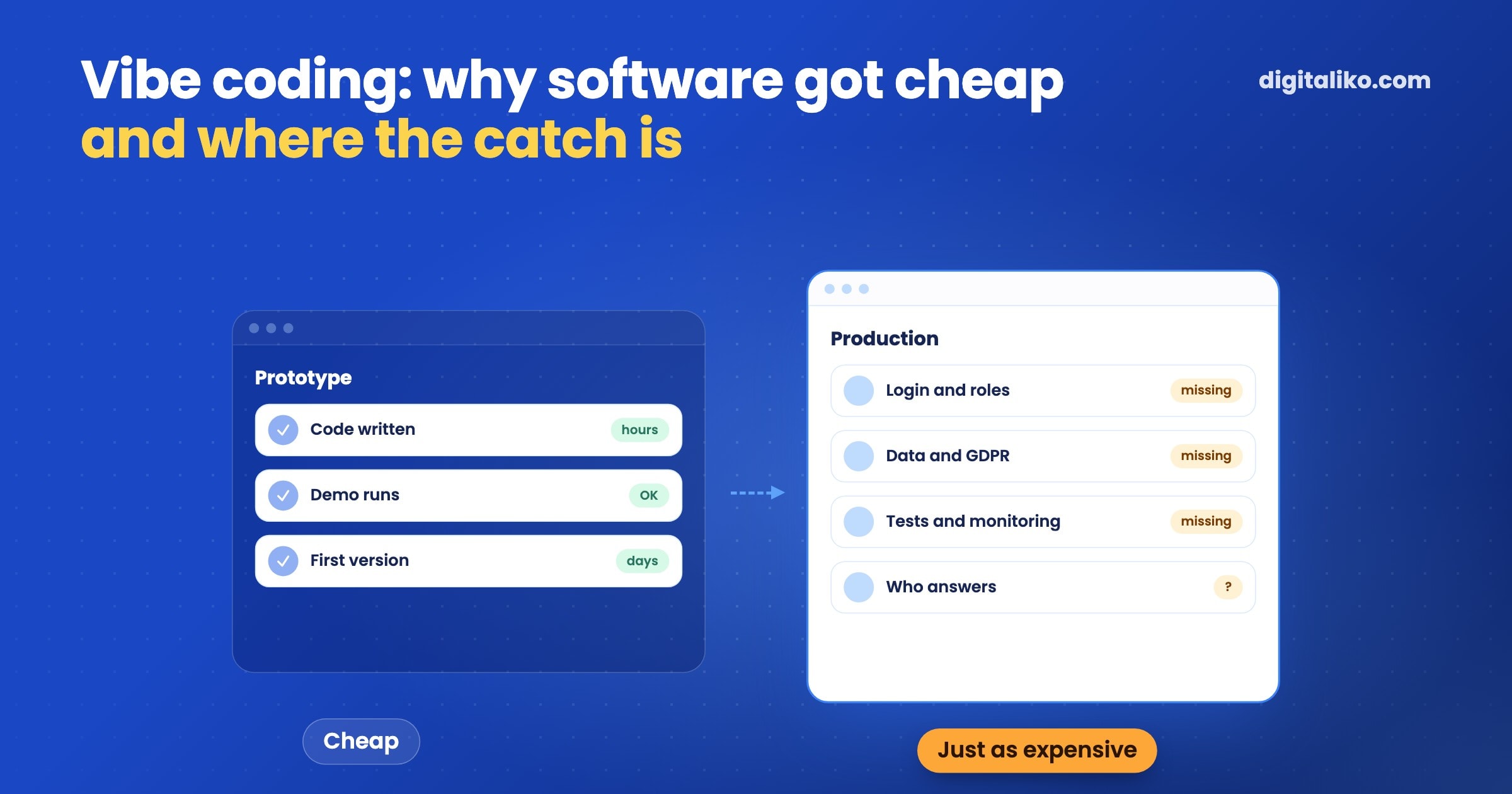
Vibe coding: what it is and why software got cheap
AI now writes code from a plain sentence and the price of AI falls fast every year. But only the code got cheap. What Karpathy and Altman say, what got cheaper, what did not, and what to do before going live.
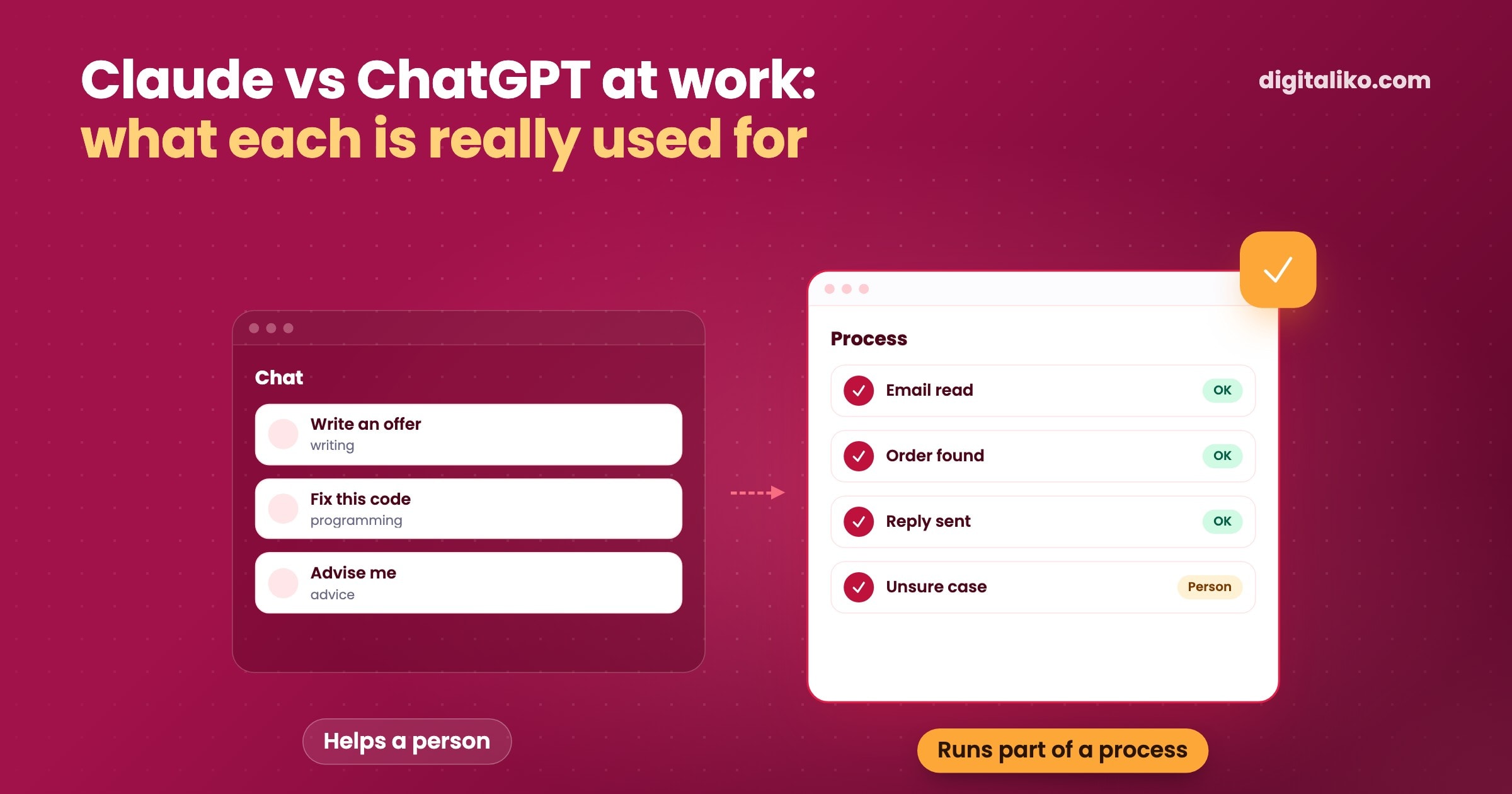
Claude vs ChatGPT at work: what each is really used for
What people and companies really use Claude and ChatGPT for, according to Anthropic data and an NBER study. Why it matters more than the brand whether AI helps a person in a chat or runs part of a process.
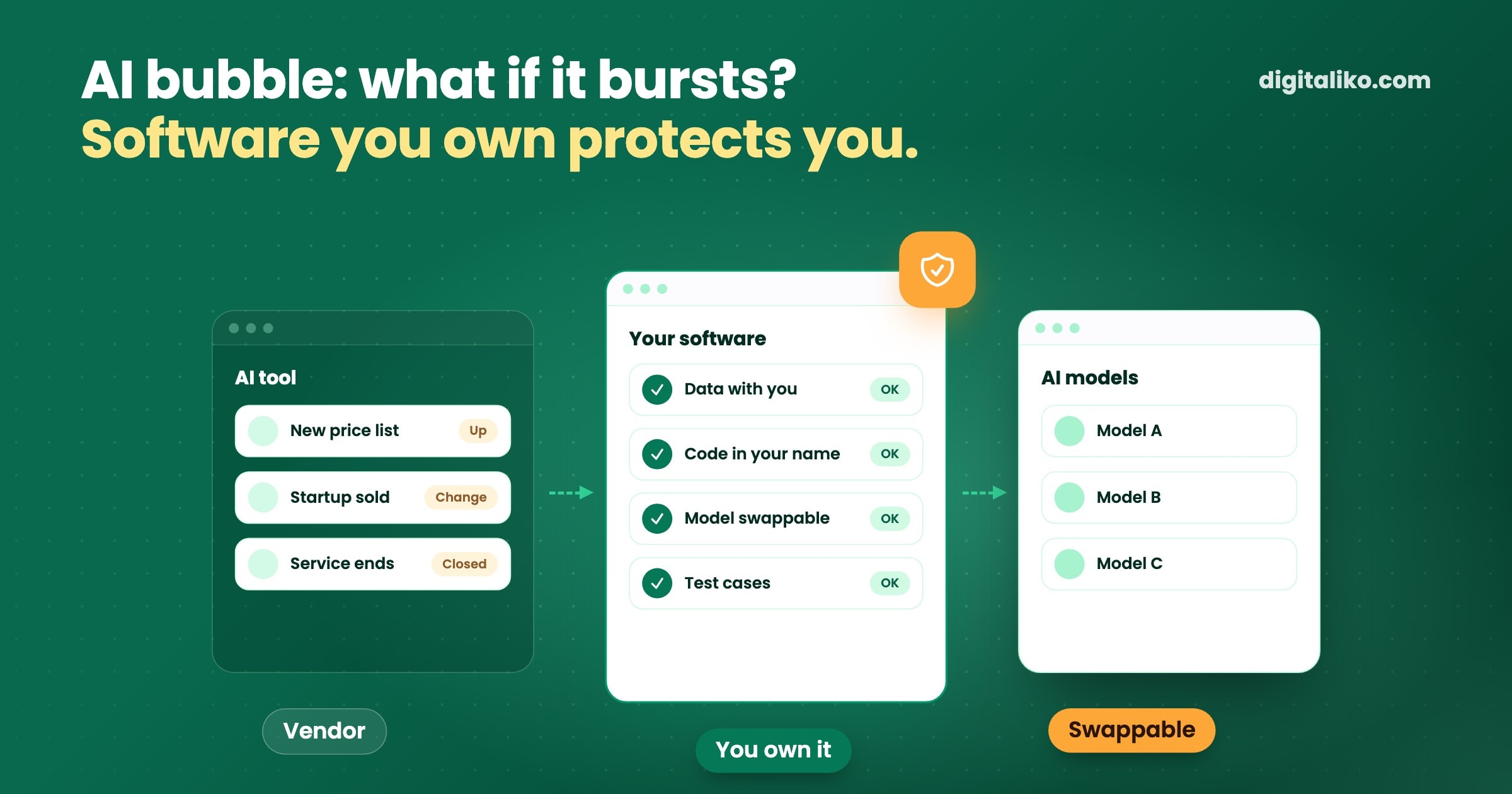
AI bubble: if it bursts, what happens to your software?
If the AI bubble bursts, Sequoia's David Cahn expects investors to take most of the loss. For a company the risk sits elsewhere: the AI tool vendor. What protects you, a checklist and where it does not apply.
Es hora de dejar de planificar y empezar a resolver.
Contacto
- Digitaliko s.r.o.
Šípková 377/17
958 03 Malé Uherce, Eslovaquia - Póngase en contacto
info@digitaliko.com
+421 950 595 506
WhatsApp