The agency didn't deliver the app. What now?
For founders · Updated

Filip Papranecfounder of Digitaliko
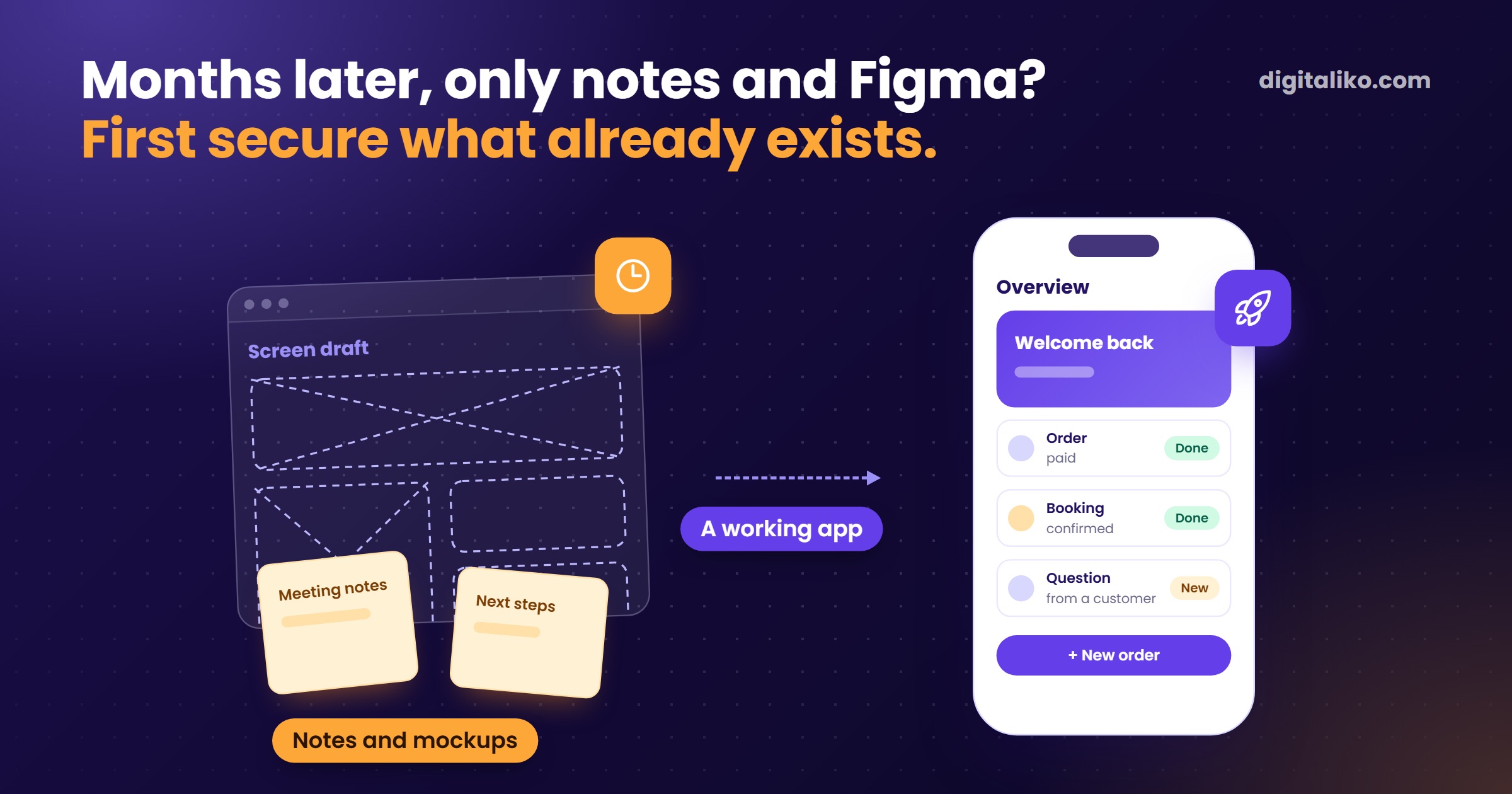
When an agency fails to deliver your app, first secure what already exists: the repository with the code, access to servers and the domain, the data and the contract. Only then decide who will carry on. You have the most options while the agency is still talking to you.
The promise was an MVP in a few weeks. Months later you have meeting notes, a Figma file and invoices. Below we describe what to secure, how to find out what really exists, and what your options are.
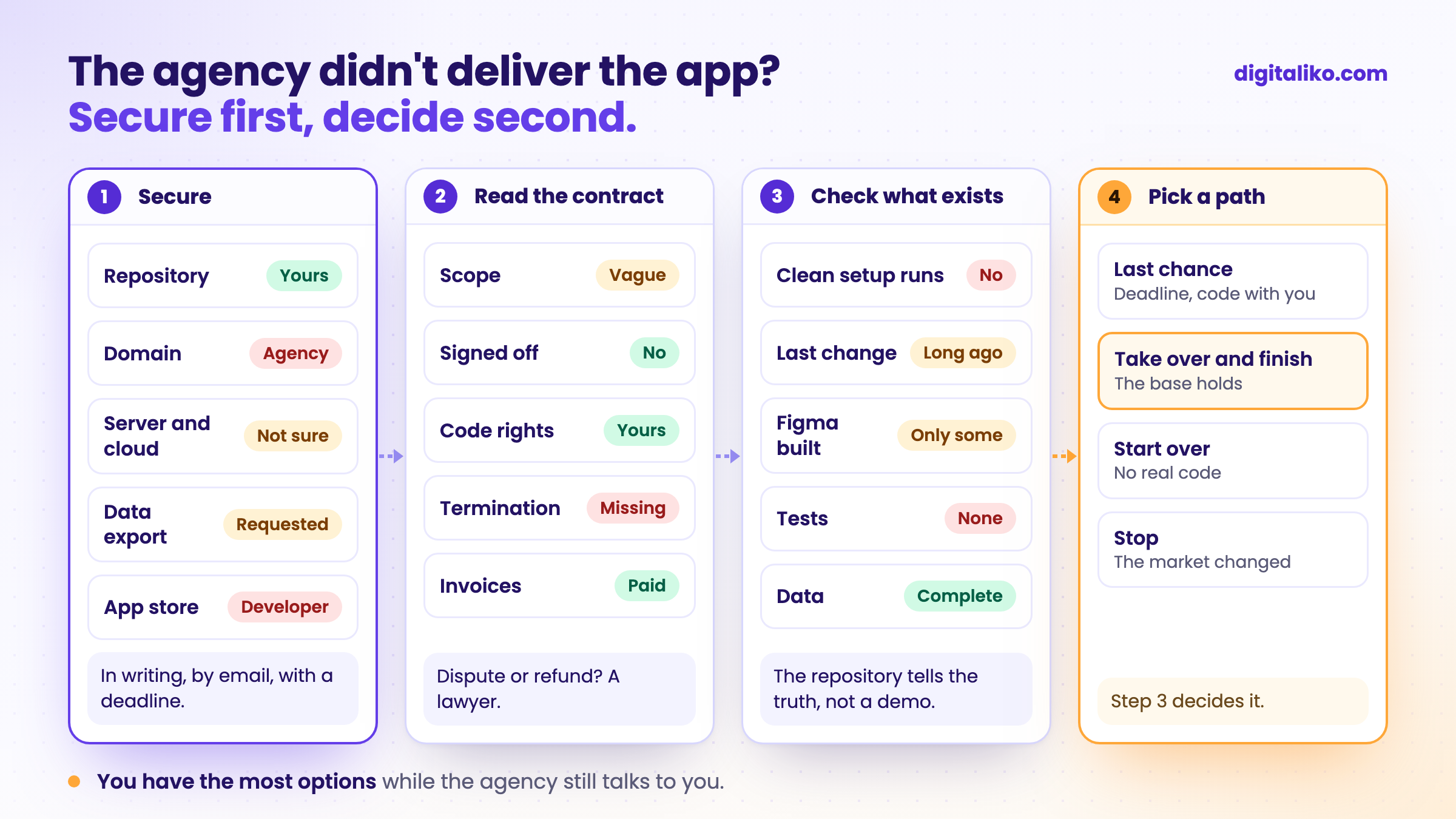
What should you secure first?
Ask for everything in writing, by email, with a deadline. Not over the phone. Go through this list today and tick what you already hold in your own hands:
If any of this is held in the agency's name, deal with that first. With the domain and app store accounts, leaving hurts the most.
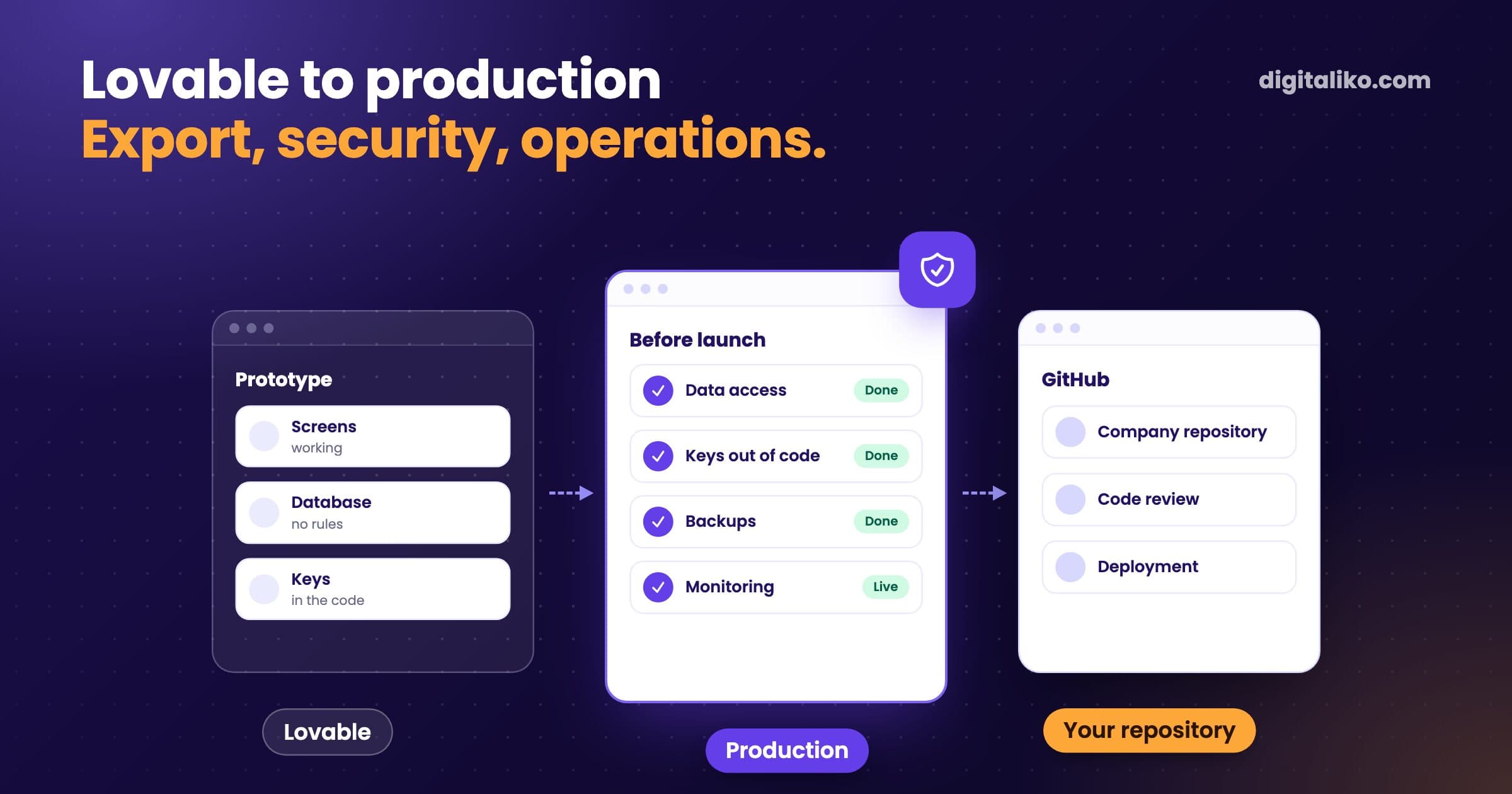
Our advice: the domain, servers and accounts should be in the client's company name from day one. Not the agency's, and not a developer's personal account. The code and data should belong to the client from day one too. That is how it works for the freight forwarder whose system we built and run.
What does the contract say?
Pull out the contract and find four places:
- What exactly the agency was to deliver and by when. Are there milestones, or just "app development"?
- How the work is accepted. Is there an acceptance step? Did you sign anything as accepted?
- Who owns the rights to the code. Does the contract rely on work made to order, or only on a licence?
- What happens on termination. Notice period, handover of code and access, help with the transition.
More on rights in Who owns the source code of custom software?. If the agency is holding back data, see Vendor won't release your data? What to do.
How do you find out what really exists?
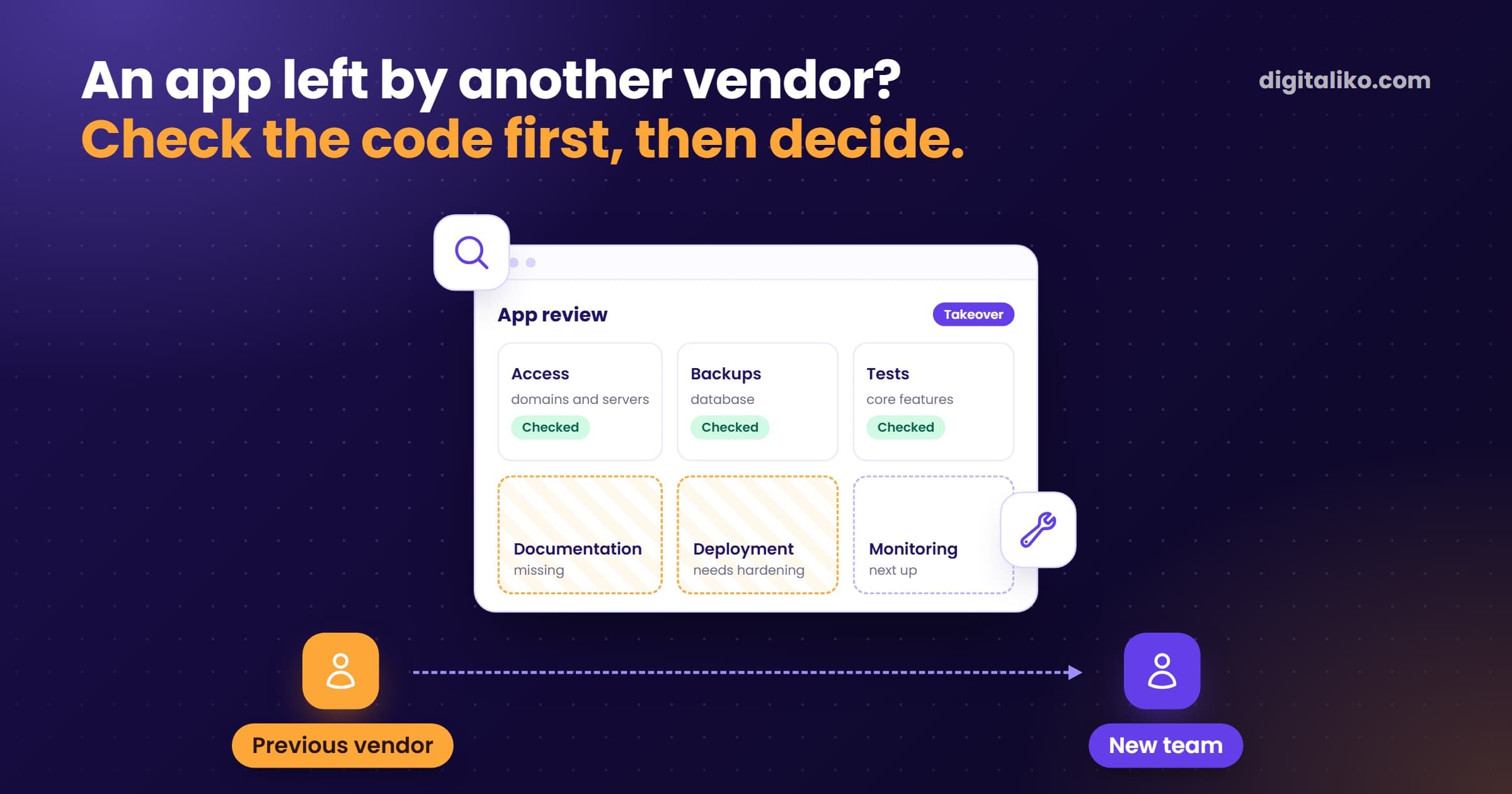
A demo on screen proves nothing. Neither does a presentation with a percentage of completion. The repository tells the truth. Go through it in this order:
01
Run it from scratch
An independent developer runs the app on a clean machine following the instructions.
02
Read the change history
When someone last changed anything, who it was and how much work was being added.
03
Compare it with the design
How much of the Figma file is actually built. A screen in Figma is not a feature.
04
Look at the tests
Does an automatic check stop a bad change, or does it just light up green?
This check does not take weeks. It tells you whether you have a foundation to build on, or just designs. Everything worth checking is in one list. Download the 25 checks before launch (PDF).
What are your options?
Depending on what you find, you have four paths:
| Option | When it makes sense | Risk |
|---|---|---|
| A last chance for the agency | The code exists and the agency communicates | Another promise without a result; hence a deadline and the code in your repository |
| Take over and finish with another vendor | The foundation holds, finishing and operations are missing | Needs an honest look into the code before a price |
| Start over | There is no code, or fixes would take longer | You pay again, but the designs and the lessons remain |
| Stop | The market has changed or the money has run out | The work in progress stops, but no more money goes out |
What a takeover looks like, and how to decide between continuing, hardening and a new version, is covered in How to take over an app from another vendor.
How do you avoid getting burned a second time?
Ask the next vendor for four things, before the first invoice:
- Access to the code from day one. And a date in the contract for moving the repository to your company, at the latest when the collaboration ends.
- Accounts in your company's name. Domain, servers, app stores.
- A working version at short intervals. Something you can click through, not a status report.
- A way out. A collaboration you can cancel without a dispute.
Click through every delivered version on real data before you sign it. The Software acceptance protocol (PDF) helps.
We got stuck once too. The second phase of a pilot failed because nobody on the client's side held the other end. Since then we ask right at the start: who on your side holds the other end?
We work on a monthly subscription you can cancel in any month. Software, data and infrastructure belong to the client from day one. Since 2023 we have delivered 15+ production projects. We finish stalled apps the same way we do MVP development for founders.
When we don't recommend it
- The agency still talks to you and the code is in your repository. Give it one last chance with a deadline. You do not need a new vendor yet.
- You mainly want your money back or a dispute. That is a job for a lawyer, not a developer.
- The market changed or the money ran out. Stop the project. Sometimes that is the cheapest decision.
- You want the whole platform finished in month one. We will not promise that. We start with one part that users get their hands on.
Is your app stuck?
Send us what you have: access to the repository, the contract and the agency's latest messages. We get back to you within two business days, and together we pick what to fix first.
If you'd rather talk first, book a 15-minute meeting with Filip.
What of the agency's work do you already hold in your own hands?
In short
- First secure the repository, domain, accounts, data and contract. In writing, and while the agency still talks to you.
- In the contract, look for what the agency was due to deliver, how the work is accepted, who owns the rights and what happens on termination.
- The repository tells you what really exists: a run from scratch, the change history and tests. Not a demo, not Figma.
- Then pick one of four paths: last chance, take over and finish, start over or stop.
Frequently asked questions
The agency didn't deliver the app. What should I do first?
Ask in writing for the repository with its full history, access to servers, the domain and accounts, and a data export. Do it while the agency still answers. Only then decide who will carry on.
Do I own what the agency managed to build?
It depends on the contract and on what you paid for. For software made to order, the client usually exercises the economic rights. But you also need the code physically in your hands, otherwise your rights exist only on paper.
How do I find out how much of the app is really finished?
Not from a demo on screen. Have someone independent run the app from the repository from scratch and look at the change history. A Figma file or a presentation is not an app.
Should I give the agency another chance?
Only with a clear deadline, one measurable result, and the code in your repository. If they still don't deliver, at least you have everything ready to leave.
When do I need a lawyer?
When the agency refuses to release the code or data, when you want money back, or when the contract does not say what you get on termination. This is not legal advice.
Ask AI about this article
The AI also draws on our other articles and experience from real projects.
ChatGPTClaudePerplexity