Vendor lock-in: how to tell you are trapped
Software ownership and vendors · Updated

Filip Papranecfounder of Digitaliko
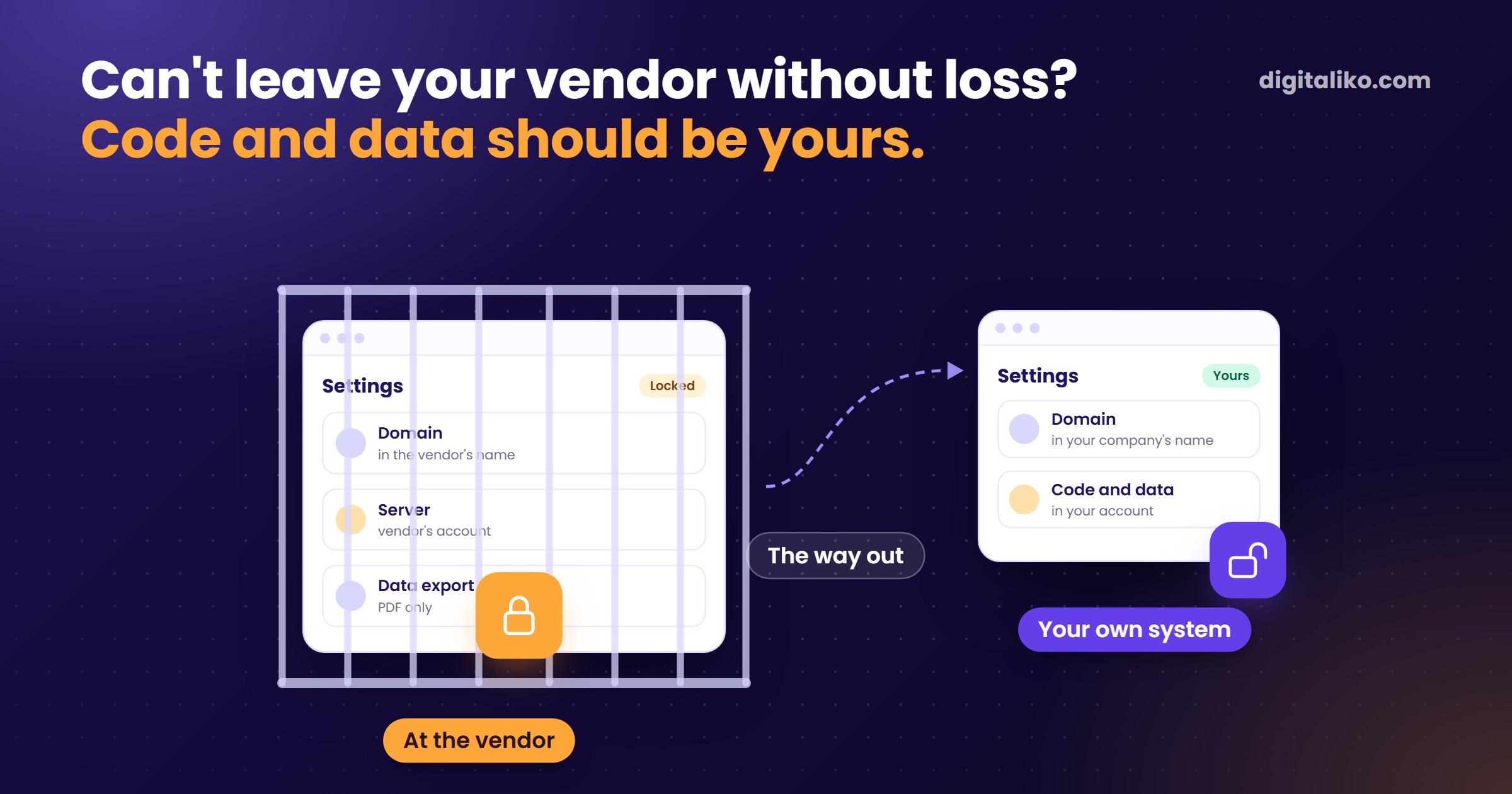
Vendor lock-in means you cannot leave a software vendor without a big loss of data, money or time. You can spot it with three questions. Can you get your data out in a usable format? Who owns the software and the access? What would leaving cost? If you do not know the answer to one of them, your vendor has you.
Since 2023 we have delivered 15+ production projects. Below are eight signs of lock-in, when it does not matter at all, and what a contract you can walk away from looks like.
What is vendor lock-in?
Lock-in does not mean a bad vendor. It is a state where leaving does not pay off, even if you would like to. A vendor can hold you in five ways:
- Data. There is no export, or only to PDF.
- Rights. The software is theirs and you only have a licence for the duration of the contract.
- Access. The domain, the server and the accounts are in their name.
- Know-how. One person at the vendor knows how the system runs.
- Contract. A long notice period, exclusivity, penalties for leaving.
Price comes on top. With rented software, whoever rents it out writes the price list. It gets more expensive even though you signed nothing.
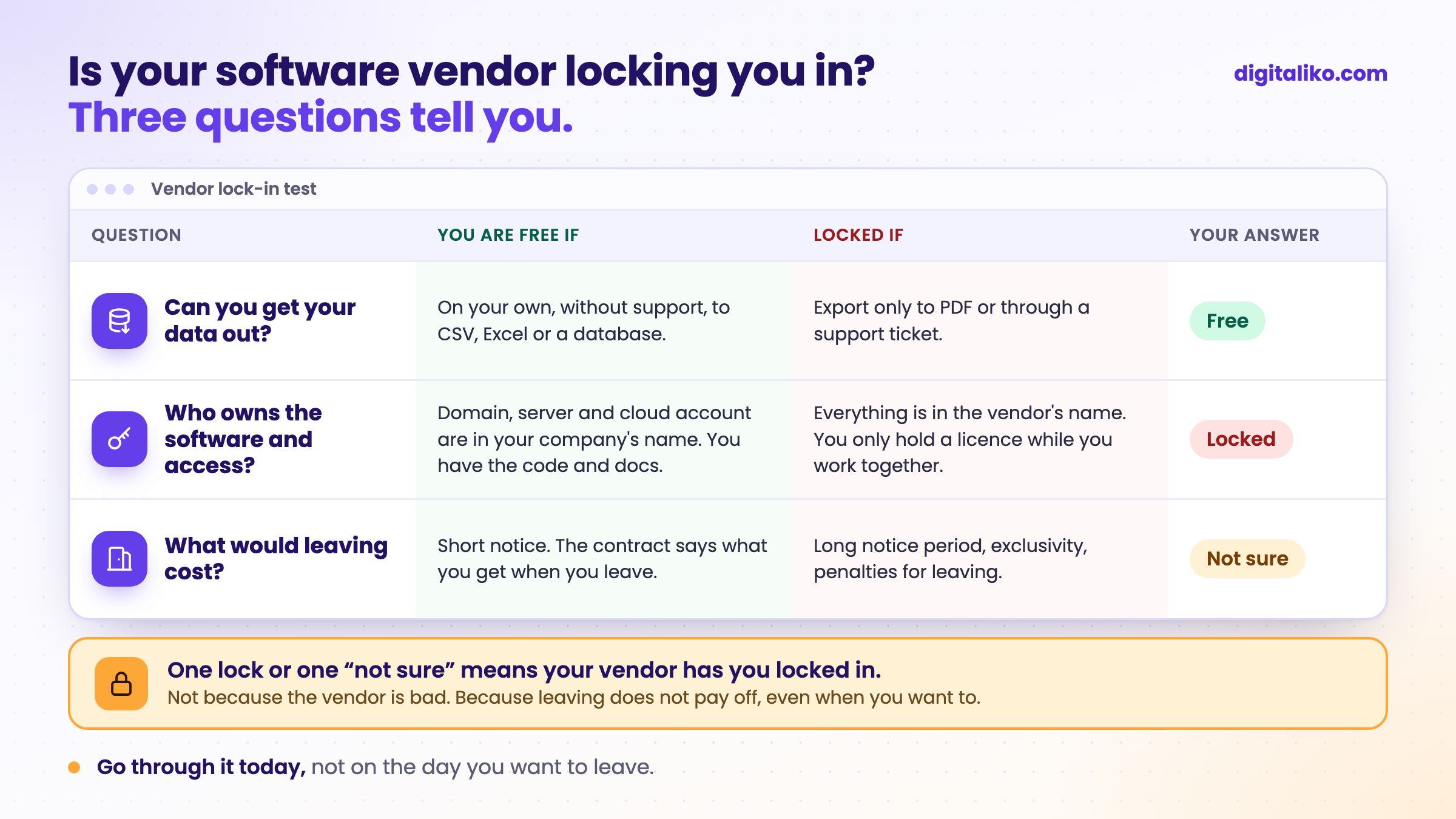
Is your software vendor holding you? A quick test
Tick what is true for you. Every unticked item is one lock.
Is vendor lock-in always bad?
No. Full independence is expensive and mostly unnecessary.
Rent it without worry
- Email, documents and accounting. They work much the same in every company.
- Critical systems such as invoicing or payments. There you need a vendor with certifications, contracts and liability. Your own software does not replace that.
Lock-in hurts here
Own it
- The process your company makes money with or stands out from competitors with.
- There, nobody else should write your prices or your rules.
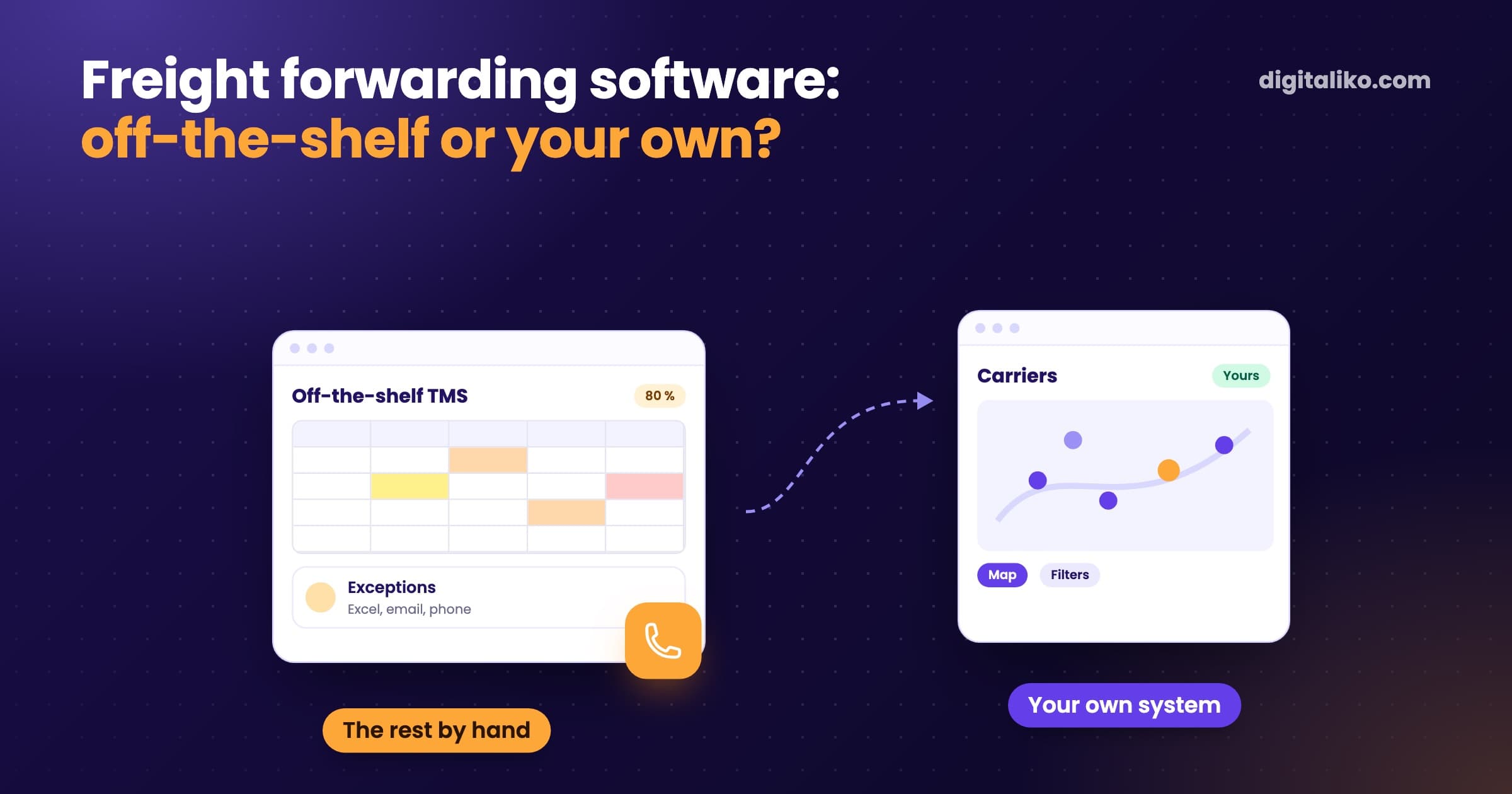
For every tool a client already has, we decide by one rule. If it works for people and you can get your data out, we connect it. Do you only use it out of habit, and does data come out only as PDF? We replace it. Technology does not decide. Who holds the data decides.
Leaving has another side too. A managed cloud setup had become too expensive for a client's online marketplace. We moved it to a plain virtual server at Hetzner. Only then did we find out how much the cloud had been doing quietly: monitoring, backups, limits. You get more control, but also more responsibility. You need the capacity for it. So before you leave, also find out what your vendor does for you that is written down nowhere.
How do you get out of lock-in?
Do not start with an argument or with notice. Go in this order:
01
Map the locks
What data, where it sits, who has access, whose name the domain is in.
02
Prepare where the data will land
The new system first, at least its foundation.
03
Ask narrowly
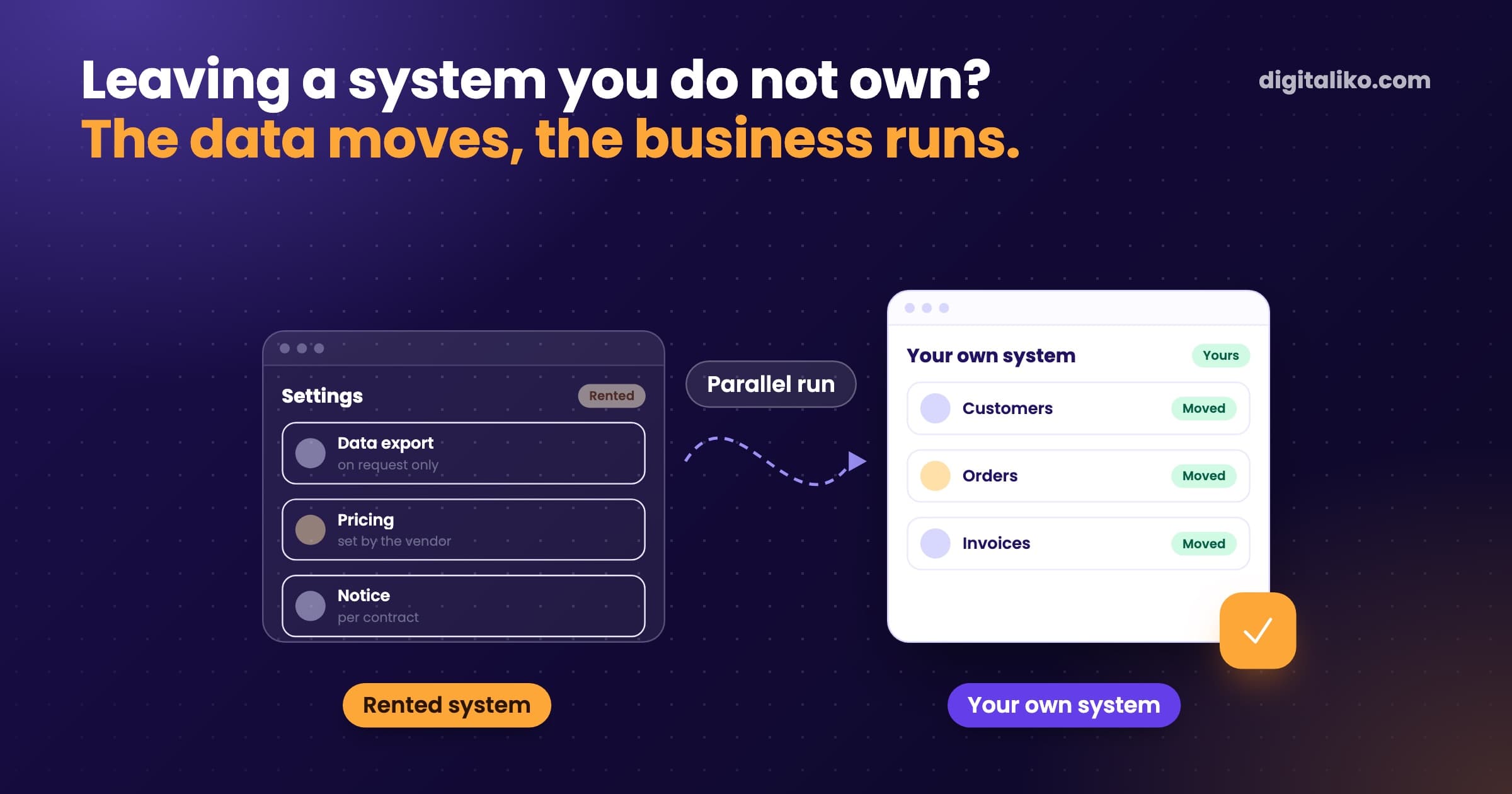
Only the data you entered, in a specific format, with a deadline.
04
Run both systems for a while
The old one read-only, so you can check that nothing is missing.
05
Move one process at a time
Not the whole company over a weekend.
The full procedure is in Vendor won't release your data? What to do.
The first time we saw lock-in in full was with one business owner. He used an off-the-shelf system, and the vendor refused to hand over his own data. By all accounts he had a right to it. In the end they reached an agreement, though the vendor stalled for a long time. Today the company has its data in a system that is its own.
Once you have the data, you can build your own software fast. It is built on first-hand data, not on guesses.
Get your data out of the software that holds you and build your own. You don't have to compete with anyone. You simply have your own.

What does a contract you can walk away from look like?
Every vendor writes down how things start. We also wrote into our contract what lets you leave us. There are three things:
- Rights by law. For software made to order, the client, meaning you, exercises the economic rights (Section 91(4) of the Slovak Copyright Act). No transfer, no licence needed. Other countries have different rules. More in Who owns the source code of custom software?.
- A permanent licence to our tools. Templates and tools we had before the contract remain ours. But you may use them for your business permanently, including with another vendor.
- Short notice. You can cancel the subscription in any month.
Why is it in there? Because we believe it belongs in the contract.
When you read the next vendor's contract, turn to the end first. Look for the notice period, exclusivity and what you get when you leave: the code, documentation, access and help moving to another vendor. If it is not written there, you will not get it. Check the same points in your current contract too. You get that kind of contract from us with all the custom software we build.
If you are considering a new vendor and price is part of it, see How much does custom software cost?.
Once you decide to leave, work through the list. Download the checklist: Leaving a software vendor (PDF).
When we don't recommend it
- It is email, documents or accounting. Rent them without worry. Lock-in does not hurt here.
- The tool works for people and you can get the data out. Do not leave. Connect it, do not replace it.
- It is critical infrastructure. Invoicing, payments and similar systems belong with a vendor that has certifications and liability.
- You have one or two locks in the test above. No need to plan an exit. Fix those points, for example the domain in your company's name.
Want to get out of lock-in?
Tell us which system you are in and what keeps you there. We get back to you within two business days, and together we pick what to fix first.
If you'd rather talk first, book a 15-minute meeting with Filip.
Which system would you switch off today if you could?
In short
- You spot lock-in with three questions: can you get your data out, who owns the software and access, and what would leaving cost.
- Rent email, documents and accounting without worry. The process your company makes money with should be yours.
- Leave lock-in step by step: first prepare where the data will land, then move one process at a time.
- In the contract, look for the notice period, exclusivity and what you get when you leave.
Frequently asked questions
What is vendor lock-in?
A situation where you cannot leave a software vendor without a big loss of data, money or time. The vendor holds you through data, rights, access, know-how or the contract.
How do I know my vendor has me locked in?
Ask yourself three questions. Can I get my data out in a usable format? Who owns the software and the access to it? What would leaving cost me? If you do not know the answer to one of them, your vendor has you.
Is vendor lock-in always bad?
No. A tool everyone uses the same way, such as email, is fine to rent. Lock-in hurts in the process your company makes money with. That one should be yours.
How do you get out of vendor lock-in?
First prepare where the data will land. Then request it in writing and narrowly, only the data you entered yourself. Keep the old system running read-only for a while and move one process at a time.
What should a contract say so that lock-in does not happen?
Who holds the rights to software made to order, what licence applies to the vendor's tools, a short notice period and what you receive when you leave. If it is not in the contract, you will not get it when you leave.
Ask AI about this article
The AI also draws on our other articles and experience from real projects.
ChatGPTClaudePerplexity